Skip to content
New users? Get 5% off on your first purchase.
Free US shipping over $100
New users? Get 5% off on your first purchase.
Free US shipping over $100

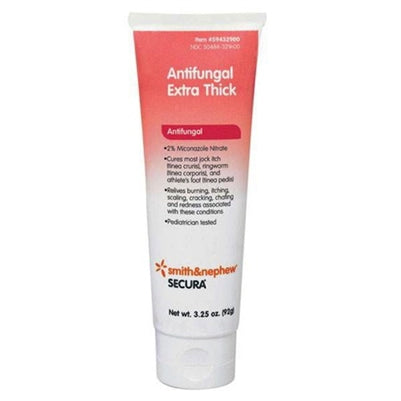
Secura Antifungal Extra-Thick Cream (2% Miconazole Nitrate)

Sale 31%
Original price $ 12.98
Current price $ 8.97
SKU 59432900

Secura Antifungal Extra-Thick Cream used to treat superficial fungal infections including tinea cruris (jock itch), tinea corporis (ringworm), (athlete's foot) and Candida albicans (yeast). For effective relief of itching, burning, scaling, cracking, redness and discomfort associated with these conditions.

 **Cure most jock itch, ring worm and athlete's foot

***Relieves burning, itching, scaling, cracked, chafing and redness associated with these conditions.

Features & Benefits

  •     Contains zinc oxide to protect skin from exposure to urine and feces
  •     Will not wash away
  •     Contains karaya to control moisture and adhere to weepy, macerated skin
  •     Contains Vitamin E and skin conditioners
  •     Pediatrician tested


Indications

SECURA Antifungal skin cream is indicated for the cure of tinea cruris (jock itch), tinea corporis (ringworm), and tinea pedis (athlete's foot).

Warnings

For external use only. Avoid contact with eyes. If irritation occurs or there is no improvement, discontinue use and consult a physician. Keep this and all drugs out of the reach of children. In case of accidental ingestion, seek professional assistance or contact a Poison Control Center immediately.

Features:

Secura Antifungal Extra-Thick Cream 3-1/4 oz. Antifungal Cream's extra-thick formula soothes scaling and cracking skin. Greaseless formula soothes burning and irritation. Extra thick formual contains karaya to control moisture and adhere to weepy, macerated skin. Contains vitamin E and skin conditioners. Allows for visual skin inspection. Absorbs quickly. Will not wash away. Pediatrician tested for safety.

Secura Antifungal Extra-Thick Cream (2% Miconazole Nitrate)
$ 12.98 $ 8.97
FAQs for Antifungal Medications
  • What Is the Best Medicine for Antifungal?

    The best antifungal medicine depends on the type and location of your infection. Fluconazole (Diflucan), terbinafine (Lamisil), clotrimazole (Lotrimin), miconazole (Monistat), and ketoconazole are among the most prescribed antifungal drugs. For topical fungal infections like ringworm or athlete's foot, Lotrimin Ultra and Lamisil are top choices. For deeper, systemic fungal infections, your healthcare provider may recommend oral options like fluconazole or itraconazole.

  • What Are 5 Antifungal Drugs?

    Our comprehensive line-up includes the top 5 most effective antifungal drugs: Fluconazole (Diflucan) Terbinafine (Lamisil) Clotrimazole (Lotrimin) Miconazole (Micatin, Monistat) Ketoconazole (Nizoral)

  • What Is the Most Commonly Prescribed Antifungal?

    The most commonly prescribed antifungal medication is fluconazole, especially for yeast infections, and terbinafine is widely used for athlete’s foot and nail fungus.

  • How Do You Treat a Fungal Infection in a Child?

    Children with fungal infections often respond well to over-the-counter topical antifungals like clotrimazole (Lotrimin) or miconazole. Always consult your pediatrician before use. Lotrimin Ultra is generally safe for kids over 2 years; just follow the label instructions or your doctor’s advice.

  • Which OTC Antifungal Is the Strongest?

    Lamisil (terbinafine) and Lotrimin Ultra (butenafine) are considered the strongest available OTC antifungals, offering fast relief and high cure rates.

  • Is Hydrocortisone an Antifungal?

    No, hydrocortisone is not an antifungal; it’s a corticosteroid used to reduce inflammation and itching. It does not kill fungus.

  • What Kills All Fungus in the Body?

    Systemic (oral) antifungals like fluconazole, itraconazole, or terbinafine are used to target internal fungal infections. However, no medication can guarantee eradication of ‘all fungus’; treatment should be targeted and guided by your doctor.

  • Are Oral Antifungals Safe?

    Oral antifungals are safe for most people when used as directed but can have side effects and interact with other medications. Always consult your healthcare provider for proper use and monitoring.

  • Can I Buy Fluconazole Over the Counter?

    Fluconazole is generally a prescription drug in most countries. OTC antifungal options include clotrimazole and miconazole creams.

  • What Is the Strongest Natural Antifungal?

    Top natural antifungal remedies include tea tree oil, oregano oil, and garlic—all have scientifically supported antifungal properties. However, consult your provider before use, especially in children or sensitive areas.

  • Can Stress Cause Fungal Infections?

    Yes, stress can weaken your immune system, making you more susceptible to fungal infections. Managing stress and maintaining good hygiene are key prevention strategies

  • What Does a Fungal Rash Look Like?

    A fungal rash usually appears as red, itchy, scaly patches with clear edges, sometimes with central clearing (ringworm). If you notice persistent rashes, consult your healthcare provider.

  • Can Kids Use Lotrimin Ultra?

    Yes, Lotrimin Ultra is approved for use in children over 2 years for certain fungal infections. Always check with your doctor or read the product label.

  • What Are Five Diseases Caused by Fungi?

    Ringworm (Tinea) Candidiasis (Yeast Infection) Athlete’s Foot Fungal Nail Infection (Onychomycosis) Histoplasmosis

  • Is Neosporin an Antifungal?

    No, Neosporin is an antibiotic ointment. It does not contain antifungal properties and should not be used for fungal infections.

  • Can Fungal Infections Spread?

    Yes! Fungal infections can spread to other body parts or to other people, especially in warm, moist environments. Always complete your treatment and follow proper hygiene.

Search Any Type of Product, Medication, or Alignment