Skip to content
New users? Get 5% off on your first purchase.
Free US shipping over $100
New users? Get 5% off on your first purchase.
Free US shipping over $100

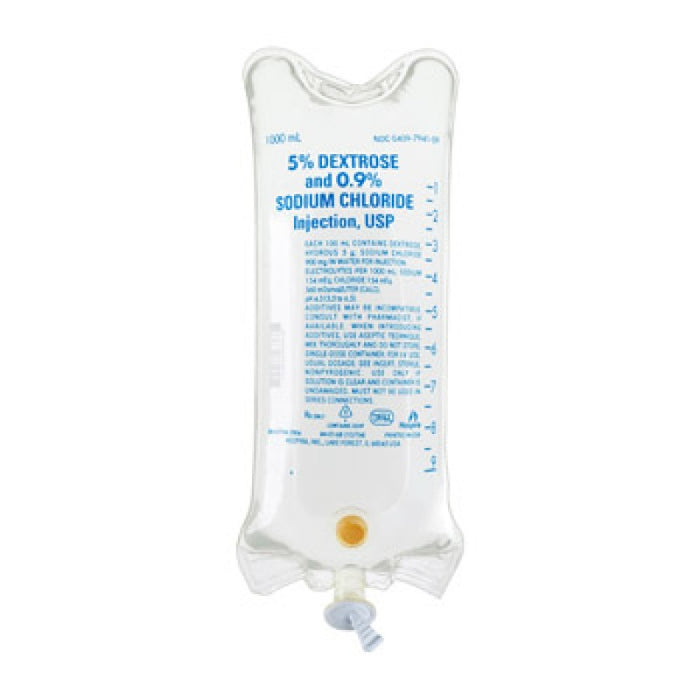
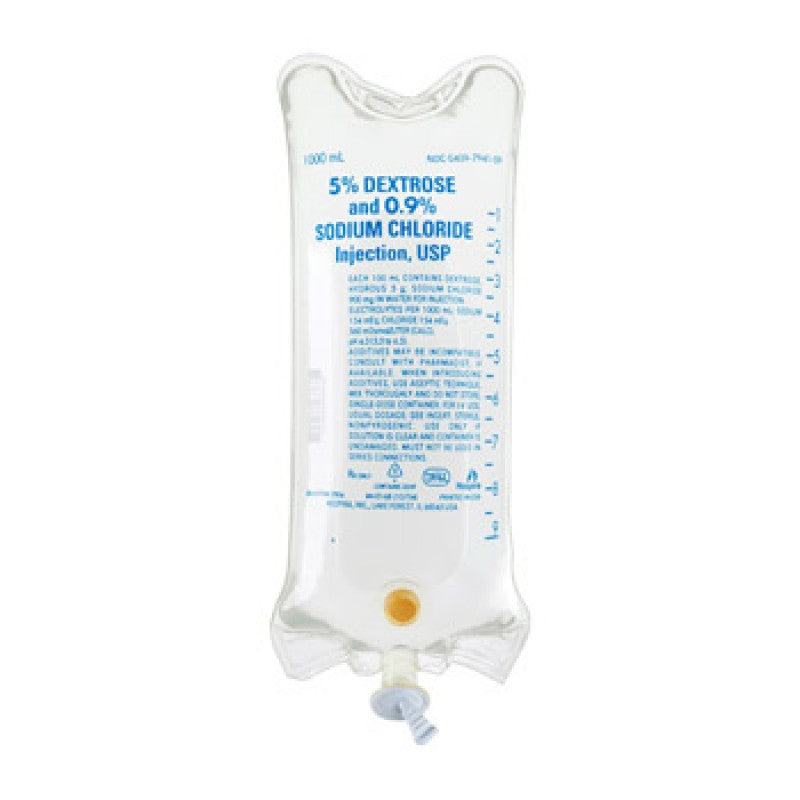
IV Bag Dextrose 5% and 0.9% Sodium Chloride IV Solution, 1000 mL Bag (Rx)

Sold out
Original price $ 18.90
Current price $ 12.40
SKU 0990-7941-09ea

ICU Medical 5% Dextrose and 0.9% Sodium Chloride injection, USP solutions are sterile and nonpyrogenic. They are large volume parenteral solutions containing various concentrations and combinations of these drugs in water for injections intended for intravenous administration.

Dehydration is a common problem in hospitalized patients, and it can lead to a number of serious complications. One way to treat dehydration is with intravenous fluids, and two of the most common fluids used are dextrose 5% and 0.9% sodium chloride. These fluids are both rich in electrolytes and glucose, which help to rehydrate the body and restore its energy levels. They are also both isotonic, which means that they have the same osmotic pressure as blood. This helps to prevent fluid from leaking out of the blood vessels and into the tissues. Both dextrose 5% and 0.9% sodium chloride are widely available and relatively inexpensive, making them a popular choice for intravenous fluid therapy.

This solution contains no bacteriostat, antimicrobial agent or buffer and each is intended only as a single-dose injection. When smaller doses are required the unused portion should be discarded.

CANNOT SHIP TO CALIFORNIA

Brand: ICU Medical

Size: 1000 mL

Buy 5% Dextrose and 0.9% Sodium Chloride 1000 mL online at Mountainside Medical Equipment.

IV Bag Dextrose 5% and 0.9% Sodium Chloride IV Solution, 1000 mL Bag (Rx)
$ 18.90 $ 12.40
FAQs about Dextrose IV Bags
  • What is Dextrose in an IV Bag?

    Dextrose is a medically purified form of glucose (a natural sugar), commonly used in IV infusions to quickly restore blood sugar levels, provide necessary calories, and rehydrate patients. In an IV bag, dextrose is diluted with sterile water, available in various concentrations (5%, 10%, 50%), and safely delivered directly into the bloodstream for immediate effect.

  • Can dextrose 10% be given peripherally?

    Yes, dextrose 10% can be administered through a peripheral IV line for short-term use. However, higher concentrations could require central venous access due to the risk of vein irritation.

  • Can a pregnant woman take dextrose water?

    Dextrose water IV is often used safely in pregnancy, particularly in cases of dehydration or during labor, but always under a doctor’s supervision to prevent complications like fluid overload or blood sugar disturbances.

  • Can you give normal saline and dextrose together?

    Absolutely. Normal saline and dextrose IV fluids can be administered sequentially or simultaneously (as in Dextrose Normal Saline – DNS solution) to maintain electrolyte and glucose balance during treatment.

  • What IV fluid is best for dehydration?

    For moderate dehydration, normal saline or dextrose saline (DNS) are typically recommended. For hypoglycemia or energy needs, dextrose solution provides fast metabolic benefits.

  • Is dextrose and saline the same thing?

    No. Dextrose IV delivers glucose for cellular energy, while saline restores electrolytes and water balance. Combined, they address both needs in one infusion (as in DNS bags).

  • How fast to push IV dextrose?

    The IV dextrose drip rate depends on the patient’s condition and concentration used. For emergency hypoglycemia, dextrose 50% may be given in a slow IV push (over 2-5 minutes). Lower concentrations (e.g., D5W) are infused at standard maintenance rates.

  • What are the side effects of dextrose IV?

    Potential side effects include: Hyperglycemia (high blood sugar) Fluid overload Vein irritation/phlebitis Electrolyte imbalances Allergic reaction (rare) Always monitor blood sugar and electrolytes during therapy.

  • How does dextrose affect labor?

    Administering dextrose in labor helps prevent low blood sugar and provides energy but should be used judiciously to avoid excessive fetal insulin response (potential for neonatal hypoglycemia).

  • Is dextrose the same as glucose?

    Dextrose is a form of glucose (D-glucose), so they are functionally the same for most medical uses.

  • When should you not use dextrose?

    Avoid dextrose IV in: Allergy to corn or dextrose Hyperglycemia, diabetes (unless treated closely) Severe dehydration with electrolyte imbalances (without correction) Intracranial/intraspinal hemorrhage Consult a physician for contraindications.

  • What medications are not compatible with dextrose?

    Some key drug-Dextrose incompatibilities include: Ceftriaxone (especially in neonates) Certain antibiotics Amphotericin B Phenytoin Always check compatibility charts before co-infusion.

  • Benefits of Our Dextrose IV Bags

    Rapid hydration and glucose restoration Sterile, pyrogen-free medical formulation Ideal for hypoglycemia, dehydration, surgery, and labor Multi-concentration options (D5W, D10W, D50W) Used safely in hospitals, clinics, and emergencies

Search Any Type of Product, Medication, or Alignment