
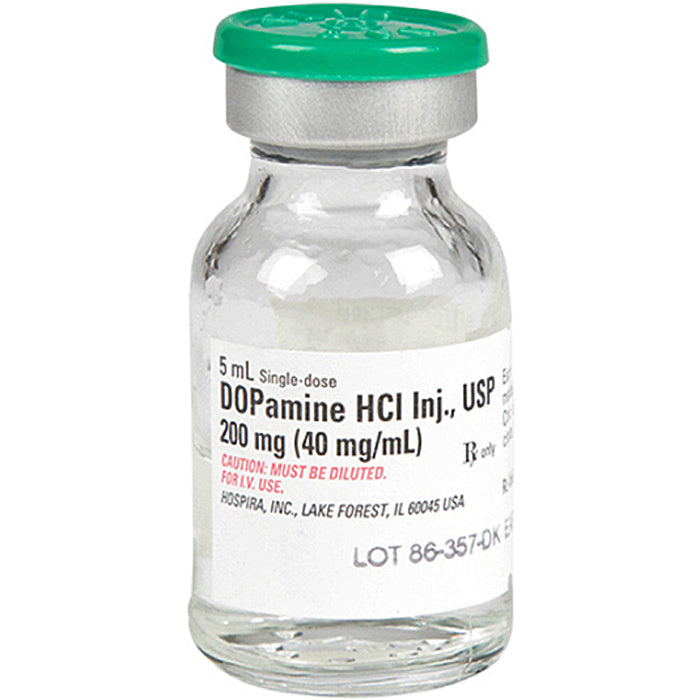

Dopamine Hydrochloride Injection 40 mg/mL Single-Dose Vials 5 mL, 25/Box by Pfizer (RX)
How to Order:
You will receive instructions on how to create an account along with Rx Ordering Details.
(Note: Acceptable licenses must have Prescriptive Authority in the license issuing state.)
Dopamine Hydrochloride Injection is used to treat conditions like shock or low blood pressure due to heart attack, trauma, or surgery. It functions as a vasopressor, enhancing cardiac output and improving blood flow by stimulating dopaminergic and adrenergic receptors. This medication is crucial in managing hemodynamic imbalances and supporting cardiovascular function in critical care settings, allowing for stabilization and improved perfusion to vital organs during acute medical emergencies.
Dopamine acts on adrenergic and dopaminergic receptors, offering a multi-faceted approach to cardiovascular support. At lower doses, dopamine stimulates dopaminergic receptors promoting vasodilation in renal and mesenteric vasculature, enhancing perfusion. At moderate doses, it stimulates beta-1 adrenergic receptors, increasing myocardial contractility and cardiac output. At higher doses, dopamine exhibits alpha-adrenergic activity leading to vasoconstriction, which elevates systemic vascular resistance and blood pressure. This dose-dependent receptor activity allows for tailored hemodynamic management.
Details and Features:
Concentration: 40 mg/mL, providing potent dosing flexibility.
Packaging: 25 single-dose 5 mL vials per box, ensuring availability in high-demand environments.
Administration Route: Intravenous infusion for immediate vascular effects.
Indications: Utilized in conditions such as cardiogenic shock, acute heart failure, and renal failure, where increased cardiac output and improved renal perfusion are critical.
Mechanism of Action:
Dopamine acts on adrenergic and dopaminergic receptors, offering a multi-faceted approach to cardiovascular support. At lower doses, dopamine stimulates dopaminergic receptors promoting vasodilation in renal and mesenteric vasculature, enhancing perfusion. At moderate doses, it stimulates beta-1 adrenergic receptors, increasing myocardial contractility and cardiac output. At higher doses, dopamine exhibits alpha-adrenergic activity leading to vasoconstriction, which elevates systemic vascular resistance and blood pressure. This dose-dependent receptor activity allows for tailored hemodynamic management.
Warnings:
-
Tachycardia and Arrhythmias: Increased heart rate or arrhythmias may occur; continuous monitoring of cardiac rhythm is essential.
-
Hypertension: Over-infusion may result in excessive vasoconstriction leading to hypertension.
-
Extravasation Risk: Dopamine is a vesicant, causing local tissue necrosis if extravasation occurs. Always use a central vein when feasible.
-
Pheochromocytoma Patients: Contraindicated in patients with pheochromocytoma due to the risk of hypertensive crisis.
- Hypovolemia: Ineffective if blood volume is not first corrected; ensure adequate fluid resuscitation before dopamine administration.
Side Effects:
-
Cardiac Effects: Palpitations, tachycardia, ectopic heartbeats.
-
Vascular Effects: Vasoconstriction, possible ischemia.
-
Gastrointestinal Effects: Nausea, vomiting.
-
Dyspnea: Respiratory difficulties may occur in some patients.
- Anxiety: Central nervous system effects such as anxiety or agitation.
Clinical Considerations:
-
Dosing Accuracy: Due to the potent nature of the drug, precise dosing calculations and titration based on patient weight and response are crucial.
-
Patient Monitoring: Continuous monitoring of blood pressure, cardiac output, and urine output is necessary to gauge effectiveness and safety.
- Individualized Therapy: Regular assessment and adjustment according to the clinical condition of the patient are vital in optimizing therapeutic outcomes.
This product is intended for use by healthcare professionals trained in advanced critical care therapies. Always refer to the complete prescribing information for detailed usage guidelines and consult a healthcare professional before making clinical decisions.
