Skip to content
Free US shipping over $100

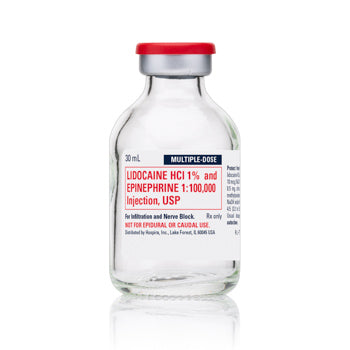
Lidocaine 1% with Epinephrine 1% 1:100,000 Injection 30 mL Multiple Dose, 25/Pack (Rx)

Sale 45%
Original price $ 525.00
Current price $ 290.00
SKU 0409-3178-02
*Mountainside Medical does not fill personal prescriptions Medical Professional License Required to Unlock Account

How to Order:

Send an email request to: sales@mountainside-medical.com

You will receive instructions on how to create an account along with Rx Ordering Details.

(Note: Acceptable licenses must have Prescriptive Authority in the license issuing state.)

Lidocaine 1% with Epinephrine 1:100,000 for Injection is used as a local anesthetic to provide pain relief and reduce bleeding during surgical, medical, and dental procedures. Lidocaine works by blocking nerve signals to numb the treatment area, while epinephrine acts as a vasoconstrictor, narrowing blood vessels to prolong the anesthetic effect and minimize bleeding. This combination is ideal for procedures requiring effective and lasting anesthesia with improved surgical field visibility, enhancing precision and patient comfort during the intervention.

*Current Expiration : February 2026 *

Lidocaine 1% with Epinephrine 1:100,000 Injection is a sterile solution used for local or regional anesthesia in various surgical and dental procedures. The combination includes lidocaine hydrochloride, a local anesthetic, and epinephrine, a vasoconstrictor. This formulation is provided in 30 mL multiple-dose vials, with each pack containing 25 vials. The addition of epinephrine helps to prolong the anesthetic effect and reduce local bleeding.

Details and Features:

Volume: 30 mL per vial
Packaging: 25 multiple-dose vials per pack
Concentration:

  • Lidocaine Hydrochloride 1% (10 mg/mL)
  • Epinephrine 1:100,000 (0.01 mg/mL)

Use: Indicated for local infiltration anesthesia, peripheral nerve blocks, and various other types of regional anesthesia
Vasoconstrictive Action: The presence of epinephrine helps to control bleeding and keeps the anesthetic localized, increasing the duration of action

Mechanism of Action:

  • Lidocaine: Works by binding and inhibiting voltage-gated sodium channels in the nerve cells, preventing the initiation and propagation of nerve impulses. This leads to a reversible loss of sensation in the targeted area.
  • Epinephrine: Acts as a vasoconstrictor by stimulating alpha-adrenergic receptors, which reduces blood flow in the area of injection. This prolongs the duration of action of lidocaine by decreasing its absorption rate into the bloodstream and also helps reduce local bleeding, providing a clearer surgical field.

Warnings:

  • Allergies: Contraindicated in individuals with a known hypersensitivity to lidocaine, epinephrine, or other amide-type local anesthetics.
  • Systemic Toxicity: Caution is advised to avoid overdosage or unintentional intravascular injection which may result in systemic toxic effects, including CNS disturbances (seizures) or cardiovascular effects (arrhythmias).
  • Cardiovascular Health: Use with caution in patients with severe heart disease, arrhythmias, or hyperthyroidism because epinephrine can exacerbate these conditions by increasing heart rate and blood pressure.
  • Proper Administration Techniques: Ensure to aspirate before injecting to avoid intravascular administration. Limit the total lidocaine dose and consider patient-specific factors (e.g., weight, age, comorbid conditions).

Side Effects:

Potential side effects associated with Lidocaine 1% with Epinephrine Injection can include:

  • Local Reactions: Pain, swelling, or redness at the injection site
  • Central Nervous System Effects: Lightheadedness, dizziness, or in rare cases, confusion or seizures at toxic levels
  • Cardiovascular Effects: Increased heart rate, hypertension, palpitations, or arrhythmias, primarily due to the epinephrine component
  • Allergic Reactions: Though rare, signs may include rash, itching, or more severe reactions such as anaphylaxis
  • Others: Numbness or tingling which generally subsides as the anesthetic effect diminishes

It is essential for administration to be performed by experienced healthcare professionals to manage anesthesia safely, monitoring for potential adverse effects, and employing proper dosing protocols tailored to the patient's individual medical profile.

Lidocaine 1% with Epinephrine 1% 1:100,000 Injection 30 mL Multiple Dose, 25/Pack (Rx)
$ 525.00 $ 290.00
🔒 Medical License Required
FAQs about Epinephrine Injections and EpiPen Autoinjectors
  • What are Epinephrine Injections and EpiPen Autoinjectors?

    Epinephrine injections (adrenaline shots) are life-saving medications used to quickly reverse severe allergic reactions and anaphylaxis. EpiPen autoinjectors and similar devices are prefilled, automatic injection pens designed for fast, user-friendly self-injection or caregiver administration in emergencies like food allergies, insect stings, or drug allergies.

  • What Are the Different Epinephrine Autoinjectors?

    EpiPen® & EpiPen Jr.®: The original and most widely used epinephrine autoinjectors. Auvi-Q®: Compact, voice-guided autoinjector. Adrenaclick®: Generic alternative with similar delivery. Generic Epinephrine Autoinjectors: FDA-approved, affordable options. Symjepi™: Prefilled syringe (not a traditional autoinjector, but compact alternative).

  • How Many Epinephrine Autoinjectors Are There?

    There are currently at least 4 major FDA-approved epinephrine autoinjector brands: EpiPen, Auvi-Q, Adrenaclick, and various generics.

  • Are EpiPens Autoinjectors?

    Yes! EpiPen is the most recognized autoinjector brand for epinephrine emergency treatment.

  • Are Autoinjectors Painful?

    The injection is usually very quick and most patients describe only brief, mild discomfort. Life-saving benefits far outweigh injection pain.

  • What is the Difference Between a Pen Injector and an Autoinjector?

    Pen injector: Multi-dose, often used for insulin, requires user button-press. Autoinjector: Single-use, spring-activated, automatic needle deployment for rapid emergency treatment (e.g., EpiPen).

  • How Many Different EpiPens Are There?

    Two main doses: EpiPen® (0.3 mg for adults/teens) and EpiPen Jr.® (0.15 mg for children 15–30 kg). Many generic equivalents now approved by FDA.

  • Why Carry Two EpiPens?

    Medical guidelines recommend carrying two EpiPens since a second dose may be needed if symptoms return or persist before emergency care is available.

  • What are the Four Stages of Anaphylaxis?

    Mild symptoms: Itching, hives, mild swelling. Moderate symptoms: Throat tightness, wheezing, trouble breathing. Severe symptoms: Drop in blood pressure, rapid pulse, dizziness, fainting. Life-threatening: Collapse, cardiac arrest, loss of consciousness.

  • Are Autoinjectors Reusable?

    No. All epinephrine autoinjectors are single-use and disposable. Never reuse them.

  • What Would an Injection of Epinephrine Do?

    Reverses severe allergic reactions by: Opening airways Raising blood pressure Reducing swelling Stopping hives and itching Preventing anaphylactic shock

  • Can I Get an EpiPen Over the Counter?

    In most regions, a prescription is required. Some U.S. states permit pharmacy access under standing orders or emergency protocols.

  • Can You Use an EpiPen Through Jeans?

    Yes, you can inject through clothing (jeans or pants), as long as pockets are empty and fabric isn't excessively thick.

  • How to Make an Autoinjector Hurt Less?

    Inject into the outer mid-thigh muscle (the recommended site) Hold still and relax the muscle Avoid hitting bone by proper placement Remember: Quick action outweighs discomfort!

  • How Long Do Autoinjectors Last?

    Shelf life is typically 12–18 months; check the expiration date and replace used/expired devices immediately.

  • Does an EpiPen Needle Hurt?

    Most patients describe brief, mild pain or a pinch, but rapid epinephrine delivery is essential to prevent life-threatening reactions.

  • Is an EpiPen an Autoinjector?

    Yes, EpiPen is the most widely known epinephrine autoinjector.

  • How to Remove Needle from Autoinjector?

    All autoinjectors have built-in needle guards. Once activated and withdrawn, the needle is covered for safe disposal. Dispose autoinjector in a sharps container.

  • What is Replacing the EpiPen?

    Auvi-Q, Adrenaclick, and generic epinephrine autoinjectors are widely available alternatives to the brand-name EpiPen.

  • Can Epinephrine Cause Diarrhea?

    Rarely. Possible side effects can include nausea, vomiting, sweating, anxiety, palpitations, and diarrhea, but these are uncommon and usually mild.

  • Is Epinephrine Safe While Breastfeeding?

    Yes. Epinephrine is considered safe for breastfeeding mothers in emergency situations due to its rapid metabolism and critical life-saving function.

  • Does Epinephrine Cause Migraines?

    Rarely. It may trigger headaches, but is not a common migraine cause. Severe allergic reactions always outweigh this risk.

  • How Long Does a Shot of Epinephrine Last?

    Effects last about 10–20 minutes (up to an hour in some cases). Seek emergency care immediately after use, as symptoms can recur.

  • Why Choose Our Epinephrine Injections & EpiPen Autoinjectors?

    FDA-approved, fast-acting emergency solution for anaphylaxis Pre-measured, easy-to-use device for self or caregiver administration Safe for adults, children, and even during pregnancy or breastfeeding Trusted by allergists, pediatricians, schools, and first responders Includes clear instructions with each device

Search Any Type of Product, Medication, or Alignment

Get Notified When Back in Stock