
Filters
- Arthritis (4)
- Bone Marrow Problems (2)
- Depo Medrol (3)
- doctor-only (14)
- Methylprednisolone (13)
- Methylprednisolone Acetate (8)
- Treat Arthritis (8)
- Treat Inflammation (7)
- Treat Lupus (2)
- Treat Severe Allergies (2)
- Treat ulcerative colitis (2)
- Ulcerative Colitis Treatment (2)
- Methylprednisolone 80 mg (1)
- Methylprednisolone Acetate 80 mg (1)
- Corticosteroid Cortisone (4)
- Corticosteroid Injection (3)
- Corticosteroids (9)
- Depo Medrol 40 mg (1)
- Depo-Medrol (1)
- Depo-Medrol Injection (3)
- glucocorticoid (6)
- joint injection (3)
- pain relief injection (1)
- prescription drugs (1)
- Steroid injection (2)
- Steroids (5)
- allergy medication (2)
- Anti-Inflammatory (1)
- anti-inflammatory drug (1)
- Anti-inflammatory Medication (1)
- Arthritis Treatment (2)
- asthma flare treatment (1)
- autoimmune therapy (2)
- best steroid for inflammation (1)
- Corticosteroid Medicine (5)
- Corticosteroid Tablets (1)
- eczema medication (1)
- immune suppression (1)
- inflammation relief (2)
- lupus flare medication (1)
- lupus medication (1)
- Medrol Dose Pack (1)
- Methylprednisolone 4 mg (1)
- oral corticosteroids (1)
- oral steroid (1)
- prednisone alternative (2)
- rheumatoid arthritis treatment (2)
- steroid tablets (1)
- Asthma Attacks (1)
- Buy Solu-Medrol (2)
- Corticosteroid Medication (5)
- Cortisone Shot (1)
- Reduce inflammation (4)
- Rheumatoid Arthritis Medication (1)
- Solu-Medrol Injection (1)
- Solu-Medrol Locally (1)
- Solu-Medrol Near Me (2)
- solumedrol (2)
- Treat Allergic Reactions (2)
- Treat rheumatoid arthritis (1)
- Arthritis pain (1)
- arthritis pain relief (1)
- Autoimmune Diseases (1)
- Immune Response (1)
- Kenalog (2)
- Osteoarthritis Knee Pain (2)
- Prolonged Relief (1)
- Reduce Swelling (3)
- Skin Disorders (1)
- Treat Osteoarthritis (2)
- anti-inflammatory medicine (1)
- Asthma Medication (3)
- COPD treatment (1)
- lupus therapy (1)
- Medrol equivalent (1)
- methylprednisolone 4 mg (1)
- methylprednisolone tablets (1)
- Oral Corticosteroid (1)
- Pain Relief (1)
- prescription steroid (1)
- rheumatology drug (1)
- steroid Pills (1)
- steroid taper oral (1)
- Zydus methylprednisolone (1)
- 80mg (1)
- allergic reactions (1)
- Asthma Treatment (2)
- Bursitis (1)
- inflammation Injection (1)
- Methylprednisolone 80mg (1)
- Treat Asthma (1)
- Treat Bursitis (1)
- Act-O-Vial (1)
- Autoimmune Disorders (1)
- immune system (2)
- Immune System Support (1)
- methylprednisolone sodium succinate (1)
- ou-exclude (2)
- Relieve Allergies (1)
- Solu-Medrol for Injection (1)
- corticosteroid allergy injection (1)
- fast allergy treatment (1)
- methylprednisolone injection (1)
- steroid injection (1)
- steroid shot (1)
- Buy Hikma (1)
- Buy Prednisone (1)
- Oral Solution (1)
- Prednisone Intensol (1)
- Prednisone locally (1)
- Prednisone Near Me (1)
- Prednisone Solution (1)
- Steroid Medication (1)
- Treat Skin Rashes (1)
- Compounding (1)
- Medisca (1)
- Pharmacy Compounding (1)
Methylprednisolone Injections
Methylprednisolone Injections
Methylprednisolone is a corticosteroid medication – specifically, a synthetic glucocorticoid – used to reduce inflammation and suppress the immune system. In simpler terms, it’s a potent steroid drug that mimics the effects of hormones produced by the adrenal glands (like cortisol). Doctors prescribe methylprednisolone to treat a wide variety of conditions where controlling inflammation is important, such as:
- Allergic reactions (severe allergies, hives, asthma flare-ups)
- Autoimmune and inflammatory diseases (for example, rheumatoid arthritis, lupus, ulcerative colitis, certain kidney inflammations)
- Skin conditions (like severe eczema or psoriasis)
- Respiratory issues (asthma exacerbations, chronic obstructive pulmonary disease flare-ups)
- Certain cancers (as part of chemotherapy protocols or to reduce swelling caused by tumors)
- Endocrine disorders (it can be used as part of hormone replacement if the body doesn’t produce enough natural corticosteroid)
Methylprednisolone relieves swelling, redness, heat, and pain by damping down the body’s inflammatory response. Because it also suppresses the immune system, it’s useful in preventing the immune system from attacking its own tissues in autoimmune diseases, or in severe allergic reactions where the immune response needs to be calmed quickly.
Common Forms and Names: Methylprednisolone comes in a few forms. The most common is oral tablets (with brand names like Medrol). These tablets are often used in what’s known as a “Medrol dose pack,” a short course where the dose tapers down over several days to manage acute inflammation (for example, a 6-day taper pack for a bad poison ivy rash or a flare of back pain). Methylprednisolone is also available as an injectable form. For instance, Solu-Medrol is a formulation of methylprednisolone (as sodium succinate) that can be given intravenously for conditions needing immediate, high-dose steroids (like a severe asthma attack or spinal cord injury treatment, where high-dose methylprednisolone may be used in the acute phase). Another injectable form is Depo-Medrol (methylprednisolone acetate), which is a longer-acting suspension that can be injected into joints for arthritis or into soft tissues for localized inflammation, or sometimes into a muscle for a depot effect. Unlike prednisone, methylprednisolone is not typically given as a simple syrup or pill for children (prednisolone or dexamethasone liquids are used more for kids), so it’s primarily tablets and injections.
Methylprednisolone injections (e.g., Solu-Medrol®, Depo-Medrol®) are trusted, clinically-proven corticosteroid medications used by hospitals, surgery centers, emergency rooms, clinics, and pain specialists worldwide. These advanced anti-inflammatory and immunosuppressive injections are indispensable in treating acute and severe inflammation, allergic reactions, asthma and COPD exacerbations, autoimmune flares, arthritis, nerve pain, spinal injuries, and critical illnesses.
Purpose
- Control Severe Inflammation: Delivers potent corticosteroid therapy to rapidly suppress inflammation, swelling, and immune overactivity in acute and chronic disease.
- Emergency & Critical Illness Support: Used in high-dose “pulse” protocols for asthma, anaphylaxis, severe allergic or autoimmune flares, and certain types of shock or trauma.
- Pain Management & Joint Relief: Provides quick, targeted relief for arthritis, bursitis, tendonitis, acute back pain, nerve root irritation, and musculoskeletal injuries.
Uses
- Acute Allergic Emergencies & Anaphylactic Reactions
- Asthma & COPD Flares Not Responsive to Inhaled Therapy
- Autoimmune Disease Flares: Multiple sclerosis, lupus, vasculitis, rheumatoid arthritis, polymyalgia rheumatica
- Severe Inflammatory Disorders: Ulcerative colitis, Crohn’s disease, nephritis, dermatomyositis
- Acute Musculoskeletal Conditions: Rheumatoid arthritis, osteoarthritis, inflammatory joint disease, sciatica, slipped disc, rotator cuff injuries
- Post-Surgical & Orthopedic Pain Control (infiltration or intra-articular injection)
- Spinal Cord Injuries: To reduce swelling and secondary damage (as per clinical guidelines)
- Cancer-Related Inflammation & Supportive Care
- Skin Disease: Severe eczema, psoriasis, drug reactions (SJS/TEN)
Types & Popular Brands
- IV (Intravenous) & IM (Intramuscular) Injections: For systemic rapid effect—used in critical care, allergy emergencies, acute flares.
- Intra-Articular & Soft Tissue Injections: For local joint pain, swelling, and inflammation.
- Epidural or Spinal Injections: For back pain, nerve root inflammation, and radiculopathy (must be used with caution).
- Single-Dose & Multi-Dose Vials: Available in sterile powder (reconstituted before use) or ready-to-use formulations.
Popular Brands:
- Solu-Medrol® (methylprednisolone sodium succinate; Pfizer/Upjohn)
- Depo-Medrol® (methylprednisolone acetate; Pfizer/Upjohn)
- A-Methapred® (Sandoz)
- Generic brands (Hospira, Hikma, Amneal, Sandoz, Fresenius Kabi, West-Ward, Viatris, Teva)
Strengths
- Solu-Medrol® (IV/IM): 40 mg, 125 mg, 500 mg, 1 g (1000 mg) per vial
- Depo-Medrol® (IM/Intra-Articular): 20 mg/mL, 40 mg/mL, 80 mg/mL per 1, 2, 5 mL vials
- A-Methapred®: Similar strengths for flexible dosing
- Vial Sizes: Single-dose (for acute care), multi-dose (for repeated or flexible administration)
Methylprednisolone is a powerful anti-inflammatory steroid drug, used when the body’s inflammatory processes need to be quickly and forcefully controlled. It’s a mainstay treatment for many serious allergic or autoimmune conditions. Because it’s a corticosteroid, it must be used according to a doctor’s directions — usually at the lowest effective dose for the shortest possible duration — to reduce the risk of steroid side effects.
Get rapid, doctor-recommended relief for inflammation, allergies, autoimmune flares, joint pain, and critical care conditions with Methylprednisolone Injections. Trusted by hospitals, clinics, pain doctors, and sports medicine teams—choose Solu-Medrol®, Depo-Medrol®, or quality generics in all strengths for fast, effective, and safe therapy. Order from leading pharmacy brands for hospital, office, and emergency supply today!
-
 Sale 23%
Original price $ 24.50Current price $ 18.90
Sale 23%
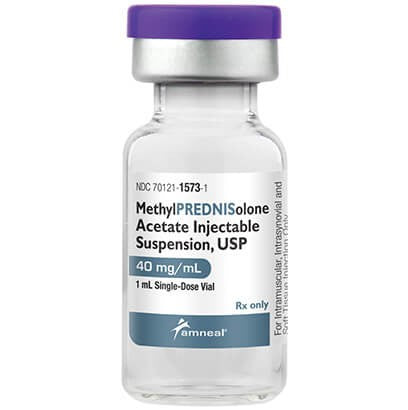
Original price $ 24.50Current price $ 18.90Methylprednisolone Acetate Injection 40 mg/1 mL Single-dose Vial (Depo-Medrol) (Rx)
2 reviewsStop severe bacterial infections in their tracks with Cefepime Injection Antibiotic 2 Gram Powder Vial by Apotex Corporation—a trusted, hospital-gr...
View full details🔒 Medical License Required -
 Sold out
Original price $ 59.95Current price $ 34.50
Sold out
Original price $ 59.95Current price $ 34.50Methylprednisolone Acetate Injection 80 mg/1 mL Single-dose Vial (Rx)
Methylprednisolone Acetate Injection 80 mg/1 mL (Generic Depo-Medrol) by Anneal Pharmaceuticals is a potent corticosteroid used to reduce inflammat...
View full details -
 Sale 20%
Original price $ 499.95Current price $ 399.95
Sale 20%
Original price $ 499.95Current price $ 399.95Depo Medrol Injection 40 mg Corticosteroid Joint Injection 1 mL x 25/Pack (Rx)
2 reviewsDepo-Medrol (Methylprednisolone Acetate) Injection Depo-Medrol is a corticosteroid injection (methylprednisolone acetate) used to rapidly reduce in...
View full details🔒 Medical License Required -
 Sale 40%
Original price $ 19.95Current price $ 11.90
Sale 40%
Original price $ 19.95Current price $ 11.90Methylprednisolone 4 mg Tablets, Blister Pack 21 Tablets by Epic Pharma (Rx)
Methylprednisolone 4 mg Tablets are a doctor-trusted, prescription corticosteroid for rapid and effective relief from severe inflammation, allergic...
View full details🔒 Medical License Required -
 Sale 31%
Original price $ 549.95Current price $ 379.00
Sale 31%
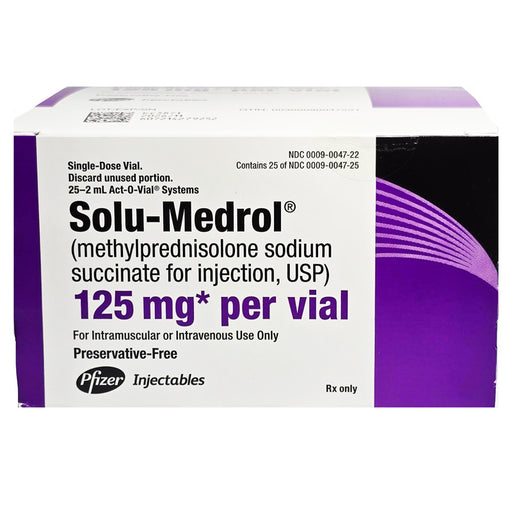
Original price $ 549.95Current price $ 379.00Solu Medrol 125 mg Injection Methylprednisolone Sodium Succinate 2 ml Vials, 25/Pack (RX)
1 reviewSolu-Medrol 125 mg Injection (Methylprednisolone Sodium Succinate) Solu-Medrol is a water-soluble corticosteroid injection (methylprednisolone sod...
View full details🔒 Medical License Required -
 Sale 34%
Original price $ 45.00Current price $ 29.55
Sale 34%
Original price $ 45.00Current price $ 29.55Depo-Medrol Methylprednisolone Acetate 80 mg for Injection 1 mL Vial (Rx)
Discover unparalleled relief from inflammation and associated conditions with Pfizer's Depo-Medrol Methylprednisolone Acetate. This powerful cortic...
View full details🔒 Medical License Required -
 Sale 41%
Original price $ 46.95Current price $ 27.80
Sale 41%
Original price $ 46.95Current price $ 27.80Methylprednisolone 4 mg Tablets by Zydus Lifesciences 100 Count (RX)
Methylprednisolone 4 mg Tablets Maximize relief from inflammation, allergies, and autoimmune flare-ups with Methylprednisolone 4 mg Tablets by Zydu...
View full details🔒 Medical License Required -
 Sale 28%
Original price $ 179.95Current price $ 129.00
Sale 28%
Original price $ 179.95Current price $ 129.00Methylprednisolone Injection 80 mg Multiple-Dose Vial 5 mL (RX)
Methylprednisolone Injection (80 mg) Methylprednisolone is a synthetic corticosteroid (glucocorticoid) used to reduce severe inflammation and modul...
View full details🔒 Medical License Required -
 Sale 22%
Original price $ 299.95Current price $ 235.00
Sale 22%
Original price $ 299.95Current price $ 235.00Solu-Medrol Injection 40 mg Single-dose Act-O-Vial System Vials 25/Tray by Pfzier (RX)
Solu-Medrol Injection 40 mg is a brand name for an injectable form of methylprednisolone sodium succinate, which is a synthetic corticosteroid (ste...
View full details🔒 Medical License Required -
 Sale 21%
Original price $ 99.95Current price $ 79.00
Sale 21%
Original price $ 99.95Current price $ 79.00Methylprednisolone Acetate Injection 200 mg/5 mL (40 mg/mL) Multiple-Dose Vial 5 mL (Rx)
Powerful Corticosteroid Solution for Inflammation, Allergy, and Autoimmune Relief Get fast, effective relief from severe inflammation, allergic rea...
View full details🔒 Medical License Required -
 Sale
$ 239.00
Sale
$ 239.00Prednisone Intensol Oral Solution (Concentrate) Steroid Medication 5mg/mL Bottle 30mL (RX)
Prednisone Intensol Oral Solution is a concentrated liquid form of prednisone, a synthetic glucocorticoid (steroid) medication used to treat a wide...
View full details🔒 Medical License Required -
 Sale
$ 115.00
Sale
$ 115.00Methylprednisolone Acetate USP (Micronized) For Compounding (API)
Methylprednisolone Acetate USP (Micronized) For Compounding (API) is a potent corticosteroid used for its anti-inflammatory and immunosuppressive p...
View full details🔒 Medical License Required -
 Sale 29%
Original price $ 5,295.00Current price $ 3,750.00
Sale 29%
Original price $ 5,295.00Current price $ 3,750.00Depo Medrol for Injection 80 mg, 5 mL x 25/Pack
Depo Medrol 80 mg is an injectable corticosteroid. It is used to decrease inflammation caused by allergic, respiratory, skin, and eye reactions and...
View full details🔒 Medical License Required -
 Sale 7%
Original price $ 3,555.95Current price $ 3,299.00
Sale 7%
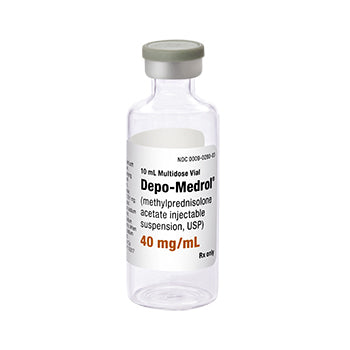
Original price $ 3,555.95Current price $ 3,299.00Depo-Medrol for Injection 40 mg, 10 mL x 25/Pack (Rx)
Depo-Medrol Injection 40 mg, 10 mL is an injection prescribed by physicians to provide relief from a wide range of inflammatory processes. It is a ...
View full details🔒 Medical License Required









People Also Searched For
Methylprednisolone Injections
Methylprednisolone is a corticosteroid medication – specifically, a synthetic glucocorticoid – used to reduce inflammation and suppress the immune system. In simpler terms, it’s a potent steroid drug that mimics the effects of hormones produced by the adrenal glands (like cortisol). Doctors prescribe methylprednisolone to treat a wide variety of conditions where controlling inflammation is important, such as:
- Allergic reactions (severe allergies, hives, asthma flare-ups)
- Autoimmune and inflammatory diseases (for example, rheumatoid arthritis, lupus, ulcerative colitis, certain kidney inflammations)
- Skin conditions (like severe eczema or psoriasis)
- Respiratory issues (asthma exacerbations, chronic obstructive pulmonary disease flare-ups)
- Certain cancers (as part of chemotherapy protocols or to reduce swelling caused by tumors)
- Endocrine disorders (it can be used as part of hormone replacement if the body doesn’t produce enough natural corticosteroid)
Methylprednisolone relieves swelling, redness, heat, and pain by damping down the body’s inflammatory response. Because it also suppresses the immune system, it’s useful in preventing the immune system from attacking its own tissues in autoimmune diseases, or in severe allergic reactions where the immune response needs to be calmed quickly.
Common Forms and Names: Methylprednisolone comes in a few forms. The most common is oral tablets (with brand names like Medrol). These tablets are often used in what’s known as a “Medrol dose pack,” a short course where the dose tapers down over several days to manage acute inflammation (for example, a 6-day taper pack for a bad poison ivy rash or a flare of back pain). Methylprednisolone is also available as an injectable form. For instance, Solu-Medrol is a formulation of methylprednisolone (as sodium succinate) that can be given intravenously for conditions needing immediate, high-dose steroids (like a severe asthma attack or spinal cord injury treatment, where high-dose methylprednisolone may be used in the acute phase). Another injectable form is Depo-Medrol (methylprednisolone acetate), which is a longer-acting suspension that can be injected into joints for arthritis or into soft tissues for localized inflammation, or sometimes into a muscle for a depot effect. Unlike prednisone, methylprednisolone is not typically given as a simple syrup or pill for children (prednisolone or dexamethasone liquids are used more for kids), so it’s primarily tablets and injections.
Methylprednisolone injections (e.g., Solu-Medrol®, Depo-Medrol®) are trusted, clinically-proven corticosteroid medications used by hospitals, surgery centers, emergency rooms, clinics, and pain specialists worldwide. These advanced anti-inflammatory and immunosuppressive injections are indispensable in treating acute and severe inflammation, allergic reactions, asthma and COPD exacerbations, autoimmune flares, arthritis, nerve pain, spinal injuries, and critical illnesses.
Purpose
- Control Severe Inflammation: Delivers potent corticosteroid therapy to rapidly suppress inflammation, swelling, and immune overactivity in acute and chronic disease.
- Emergency & Critical Illness Support: Used in high-dose “pulse” protocols for asthma, anaphylaxis, severe allergic or autoimmune flares, and certain types of shock or trauma.
- Pain Management & Joint Relief: Provides quick, targeted relief for arthritis, bursitis, tendonitis, acute back pain, nerve root irritation, and musculoskeletal injuries.
Uses
- Acute Allergic Emergencies & Anaphylactic Reactions
- Asthma & COPD Flares Not Responsive to Inhaled Therapy
- Autoimmune Disease Flares: Multiple sclerosis, lupus, vasculitis, rheumatoid arthritis, polymyalgia rheumatica
- Severe Inflammatory Disorders: Ulcerative colitis, Crohn’s disease, nephritis, dermatomyositis
- Acute Musculoskeletal Conditions: Rheumatoid arthritis, osteoarthritis, inflammatory joint disease, sciatica, slipped disc, rotator cuff injuries
- Post-Surgical & Orthopedic Pain Control (infiltration or intra-articular injection)
- Spinal Cord Injuries: To reduce swelling and secondary damage (as per clinical guidelines)
- Cancer-Related Inflammation & Supportive Care
- Skin Disease: Severe eczema, psoriasis, drug reactions (SJS/TEN)
Types & Popular Brands
- IV (Intravenous) & IM (Intramuscular) Injections: For systemic rapid effect—used in critical care, allergy emergencies, acute flares.
- Intra-Articular & Soft Tissue Injections: For local joint pain, swelling, and inflammation.
- Epidural or Spinal Injections: For back pain, nerve root inflammation, and radiculopathy (must be used with caution).
- Single-Dose & Multi-Dose Vials: Available in sterile powder (reconstituted before use) or ready-to-use formulations.
Popular Brands:
- Solu-Medrol® (methylprednisolone sodium succinate; Pfizer/Upjohn)
- Depo-Medrol® (methylprednisolone acetate; Pfizer/Upjohn)
- A-Methapred® (Sandoz)
- Generic brands (Hospira, Hikma, Amneal, Sandoz, Fresenius Kabi, West-Ward, Viatris, Teva)
Strengths
- Solu-Medrol® (IV/IM): 40 mg, 125 mg, 500 mg, 1 g (1000 mg) per vial
- Depo-Medrol® (IM/Intra-Articular): 20 mg/mL, 40 mg/mL, 80 mg/mL per 1, 2, 5 mL vials
- A-Methapred®: Similar strengths for flexible dosing
- Vial Sizes: Single-dose (for acute care), multi-dose (for repeated or flexible administration)
Methylprednisolone is a powerful anti-inflammatory steroid drug, used when the body’s inflammatory processes need to be quickly and forcefully controlled. It’s a mainstay treatment for many serious allergic or autoimmune conditions. Because it’s a corticosteroid, it must be used according to a doctor’s directions — usually at the lowest effective dose for the shortest possible duration — to reduce the risk of steroid side effects.
Get rapid, doctor-recommended relief for inflammation, allergies, autoimmune flares, joint pain, and critical care conditions with Methylprednisolone Injections. Trusted by hospitals, clinics, pain doctors, and sports medicine teams—choose Solu-Medrol®, Depo-Medrol®, or quality generics in all strengths for fast, effective, and safe therapy. Order from leading pharmacy brands for hospital, office, and emergency supply today!
Types of Methylprednisolone generally refer to the different formulations and brand names in which methylprednisolone is available. Methylprednisolone comes in a few key forms:
-
Oral Methylprednisolone Tablets: Often known by the brand name Medrol, these are pills taken by mouth. They are used for systemic (whole-body) effects to treat inflammatory and autoimmune conditions. Common tablet strengths are 4 mg, 8 mg, 16 mg, and 32 mg. The tablets can be given as a single daily dose or in divided doses, and there’s a popular “dose pack” (Medrol Dosepak) that provides a pre-set tapering schedule of 4 mg tablets over 6 days. These tablets are immediate-release, meaning they dissolve and get absorbed quickly in the digestive tract to exert their effect. When someone says “methylprednisolone” in a prescription context, they are often referring to these oral tablets unless specified otherwise.
-
Injectable Methylprednisolone (IV/IM – Solu-Medrol): This form is a water-soluble powder or solution that can be given by intravenous (IV) infusion or intramuscular (IM) injection. The most well-known brand is Solu-Medrol, which contains methylprednisolone sodium succinate. This formulation dissolves in water, making it suitable for injections into a vein or muscle. Solu-Medrol comes in vials of various strengths (e.g., 40 mg, 125 mg, 500 mg, 1 gram vials) that are reconstituted with sterile water. It’s used when a powerful anti-inflammatory effect is needed rapidly or when a patient can’t take oral medication. For example, Solu-Medrol is given IV in hospital for severe asthma attacks, allergic reactions, or acute flares of autoimmune diseases. When given IV, it acts quickly to reduce inflammation. When given IM, it’s absorbed over a few hours. This form is purely for systemic effects. Once injected, it works like a high dose of steroid circulating in the body (it’s not a long-acting depot; that’s the next type).
-
Long-Acting Depot Injection (IM/Intralesional – Depo-Medrol): Depo-Medrol is a brand of methylprednisolone in the form of methylprednisolone acetate, which is an insoluble suspension. Because it’s not water-soluble, when injected into a muscle or a joint, it creates a depot (reservoir) that releases the steroid slowly over time. Depo-Medrol is used for longer-lasting effect in a localized area. For example, a doctor might inject Depo-Medrol into an inflamed joint (knee, shoulder, etc.) to treat arthritis – providing relief over several weeks. It’s also injected into soft tissues or bursae for tendonitis or into epidural space for back pain (in certain cases). Depo-Medrol is milky in appearance (a suspension), and must never be given IV due to the particulate matter. Common concentrations are 20 mg/mL, 40 mg/mL, or 80 mg/mL suspensions. When given intramuscularly (in the buttock, for instance), it can provide a systemic steroid effect that lasts longer than Solu-Medrol – often used if a patient needs an anti-inflammatory effect but may not reliably take pills, or to avoid daily oral dosing. In summary, Depo-Medrol = long-acting injectable methylprednisolone, typically used for site-specific therapy or sustained systemic release.
-
Topical Methylprednisolone (for skin use): While less often referred to in the context of “methylprednisolone” types, there is a derivative called methylprednisolone aceponate used in dermatology. This is found in certain prescription creams, ointments, or lotions (one brand name is Advantan in some countries). It’s a potent topical corticosteroid applied to the skin for eczema, dermatitis, or psoriasis. When absorbed in the skin, methylprednisolone aceponate is metabolized to an active form (which is actually methylprednisolone-17-propionate) that reduces skin inflammation. This topical form is very targeted – it’s not used for systemic issues, only for treating inflammation of the skin. It’s worth noting this because it’s technically a form of methylprednisolone used in medicine, but it’s formulated specifically for skin application and has minimal systemic absorption when used properly. In many regions, however, the term “methylprednisolone” without qualification is usually understood to mean the systemic forms (oral or injectable), since the topical has its own specific naming (often just called Advantan or “methylprednisolone cream”).
-
Combination Forms: Methylprednisolone can also be found in certain combination medications for specific uses. For example, some intramuscular injection mixtures may combine methylprednisolone acetate with a local anesthetic for pain relief in joint injections. There are also combination packs where methylprednisolone is provided along with other drugs (though this is more rare). However, there’s no fixed combination tablet (like methylprednisolone with something else in one pill) in common use – combinations are usually in the context of injection mixtures prepared by clinicians.
Key Brand Names Recap:
- Medrol: Oral methylprednisolone tablets.
- Medrol Dosepak: A pack of twenty-one 4 mg tablets with instructions for a 6-day taper.
- Solu-Medrol: Injectable methylprednisolone sodium succinate (IV/IM use).
- Depo-Medrol: Injectable methylprednisolone acetate suspension (IM or intra-articular use).
- (Advantan: Topical methylprednisolone aceponate for skin conditions, not used systemically.)
Each “type” of methylprednisolone is used in scenarios best suited to its formulation:
- Tablets (Medrol) for convenient dosing in chronic or subacute conditions, taken by patients at home.
- IV/IM Solu-Medrol for emergency or inpatient settings when rapid and high levels of steroid are needed or oral intake isn’t feasible.
- Depo-Medrol injections for long-lasting effect in a localized area (like a joint injection) or a depot IM dose.
- Topical forms for dermatological use on the skin.
Despite these different forms, the active medication (methylprednisolone) works the same way pharmacologically – by suppressing inflammation and the immune response. The different types simply allow doctors to choose the appropriate route and duration of effect for the patient’s condition.
Methylprednisolone dosages can vary widely depending on the condition being treated, the severity of that condition, and whether the treatment is short-term or long-term. Below is an overview of common dosing information, including available strengths of the medication and typical dosage ranges for various scenarios:
-
Available Strengths (Tablets): Methylprednisolone oral tablets come in multiple strengths. The most common strengths are 4 mg, 8 mg, 16 mg, and 32 mg per tablet. (In some countries, 2 mg tablets are also available, marketed under names like Medrone 2 mg, but 4 mg is often the base strength used in the U.S., especially for dose packs.) The variety of strengths allows flexibility in dosing – doctors can combine tablets to make up a specific dose if needed. For example, a 12 mg dose could be given as three 4 mg tablets, or a 24 mg dose as one 16 mg + one 8 mg, etc.
-
Medrol Dose Pack (Tapering Course): A very common way methylprednisolone is prescribed for acute inflammation (like a bad allergic reaction, a flare of back pain, or a poison ivy rash) is as a Medrol Dosepak. This is a pre-packaged 6-day tapering regimen of 4 mg tablets. It contains a total of 21 tablets of 4 mg each, with instructions to take:
- Day 1: 24 mg (usually taken as 2 tablets before breakfast, 1 after lunch, 1 after supper, and 2 at bedtime, totaling 6 tablets = 24 mg).
- Day 2: 20 mg (5 tablets spread through the day),
- Day 3: 16 mg (4 tablets),
- Day 4: 12 mg (3 tablets),
- Day 5: 8 mg (2 tablets),
- Day 6: 4 mg (1 tablet). This taper helps to rapidly control inflammation and then safely reduce the dose over a short period. The dose pack is convenient because it has the exact pills and schedule labeled for a patient to follow. Important: This is just one common regimen; doctors can customize tapers for different durations or starting doses as needed.
-
Typical Dosage Range for Inflammation: For many inflammatory or autoimmune conditions in adults, the usual starting dosage of oral methylprednisolone is anywhere from 4 mg to 48 mg per day. depending on how severe the symptoms are. For mild issues (like a mild asthma flare or mild arthritis flare), a lower dose such as 4 mg to 16 mg daily might suffice. For more severe conditions (like a significant lupus flare or severe poison ivy), higher doses in the 24–48 mg per day range might be used initially. Once the condition is controlled, doctors will aim to taper down to the lowest effective dose or even alternate-day dosing if long-term therapy is needed (to reduce side effects). Some chronic conditions might be managed on a small daily dose like 4 mg or 8 mg per day long-term, whereas acute flares might require the higher end of the range for a short time.
-
High-Dose “Pulse” Therapy: In certain acute, severe situations, very high doses of methylprednisolone are given, usually via injection (intravenously). For example:
- Severe asthma attacks or acute COPD exacerbations in the ER: A common IV dose is 40 to 125 mg of methylprednisolone (as Solu-Medrol) given as a one-time injection or every 6-12 hours for a day or two. 125 mg IV is a typical dose for a moderate-severe asthma flare in an emergency setting.
- Acute spinal cord injury (though use is debated): Very high-dose IV methylprednisolone protocols have been used in the past (e.g. an initial bolus of 30 mg/kg IV, followed by an infusion of 5.4 mg/kg/hr for 23 hours).
- Multiple Sclerosis flares: Often treated with “IV steroid pulses” – for example, 500 mg to 1000 mg IV daily for 3 to 5 days (commonly 1000 mg IV for 3 days is used). This high dose helps rapidly quell the MS relapse inflammation. The healthline reference notes an oral regimen for MS as well: 200 mg per day for 1 week, then 80 mg every other day for a month– but in practice, many neurologists go with a 3-5 day IV pulse.
- Severe lupus or other life-threatening autoimmune flare (e.g., lupus nephritis, vasculitis): “Pulse” steroids are common – like 500–1000 mg IV daily for 3 days, then switch to a lower oral dose. These high doses are given usually in a hospital setting due to the need for monitoring. They are short-term because long-term use of such high doses would cause severe side effects.
-
Injections (Dose and Forms): Methylprednisolone comes in injectable forms like Solu-Medrol (methylprednisolone sodium succinate) for IV or IM use, and Depo-Medrol (methylprednisolone acetate) for intramuscular or intra-articular use. Common vial strengths for Solu-Medrol are 40 mg, 125 mg, 500 mg, and 1 gram vials (the two larger doses are reconstituted from powder; 40 mg and 125 mg often come as solution or powder vials for quick use). Depo-Medrol (which is a suspension, not for IV use) comes in vials like 20 mg/mL, 40 mg/mL, or 80 mg/mL. When injecting into a joint (e.g., for arthritis in a knee), a typical dose might be 20-80 mg Depo-Medrol (depending on the size of the joint – larger joints like knee or shoulder might get 40-80 mg, smaller joints like wrist maybe 20 mg). For an IM injection for a systemic effect (depot effect), doses like 40 to 120 mg can be given in the muscle for a slow release over time (though IM use is less common than oral or IV for systemic treatment). Always, the exact dosing is tailored to the patient and indication.
-
Pediatric Dosing: In children, dosing is usually based on weight or body surface area. For example, a common regimen might be 0.5 to 2 mg per kg of body weight per day in divided doses for anti-inflammatory effects (depending on the severity of the condition). In acute asthma for kids, sometimes a burst like 1-2 mg/kg/day (max ~60 mg/day) for a few days is used. For severe cases like leukemia or transplant, much higher per-weight doses can be used. There isn’t a one-size-fits-all; doctors carefully calculate what children need, and because long-term steroid use can affect growth, they use the minimum effective dose. Methylprednisolone doesn’t commonly come as a flavored liquid like prednisolone; often in pediatrics, prednisolone syrup is used instead for ease of dosing. However, if using methylprednisolone, a pharmacist might compound a liquid or use the injectable form orally for kids if needed.
-
Alternate-Day Dosing: For chronic therapy in conditions like rheumatoid arthritis or nephrotic syndrome, a strategy to reduce side effects is alternate-day dosing. Methylprednisolone has an intermediate half-life, so giving it every other day in the morning can still maintain control of the condition for some patients while lessening adrenal suppression. For instance, instead of 4 mg daily, a doctor might try 8 mg every other day. The dose on the off-day is zero (or very low). This doesn’t work for all diseases, but for some people it’s an option to reduce long-term side effects. Dosages in alternate-day therapy are typically about double the daily dose, given every other morning.
-
Tapering: If methylprednisolone has been used for more than a couple of weeks at moderate or high doses, doctors will usually implement a dose taper rather than stopping abruptly. The taper schedule can vary: it might be a rapid taper over a week for short-term courses, or a very slow taper (reducing by a few milligrams each week) for long-term chronic use. For example, someone on 16 mg daily for a month might go to 12 mg daily for a week, then 8 mg for a week, then 4 mg for a week, then stop – as one possible taper plan. The reason for tapering is to allow the body’s own adrenal function to recover and to prevent a flare of the underlying condition. In the case of the prepackaged Medrol Dosepak, the taper is built-in over 6 days for that short course.
-
Maximum Dosage: There isn’t a single “max” dosage in the sense of a hard cap, because in life-threatening situations extremely high doses are used (like the 1000 mg IV pulses). However, outside of those critical scenarios, doses above 48-60 mg per day are rarely used for routine outpatient treatment due to side effect concerns – and if needed, usually only for short durations. Methylprednisolone is roughly equivalent to prednisone mg for mg (methylpred is slightly stronger), so using >50 mg of prednisone equivalent per day is considered a high dose. In multiple sclerosis relapses, an example from the Healthline source showed 200 mg per day for 7 days as an unusually high oral dose for that specific situation (though, again, many clinicians prefer IV in that case).
Summary: Methylprednisolone dosing is highly individualized:
- Tablet Strengths: 4 mg, 8 mg, 16 mg, 32 mg are standard.
- Common Adult Dose Range: 4 mg to 48 mg per day for many conditions. Doctors adjust within this range based on response. Some mild cases might be managed on 4-8 mg, severe flares might start at 24-48 mg then taper.
- High Dose Therapy: Short bursts like a Medrol Dosepak (starting at 24 mg and tapering) for a 6-day course, or very high doses (125 mg IV, or even 500-1000 mg IV in pulses) for acute emergencies.
- Injection Doses: 40-120 mg IM or 20-80 mg intra-articular, etc., depending on the formulation and use-case.
- Pediatric: Weight-based, often 0.5-2 mg/kg/day for anti-inflammatory purposes, adjusted as needed.
- Tapering: Gradual reduction when discontinuing if used more than about 1-2 weeks, to prevent withdrawal and allow adrenal recovery.
Always, the dosing should follow a physician’s prescription, as they will calibrate the dose to the minimum required to achieve the desired effect and adjust it if the condition improves or if side effects arise.
Methylprednisolone injection Uses
Methylprednisolone injections are used to treat a wide range of conditions where a strong anti-inflammatory or immunosuppressive effect is needed, especially when quick action is required or when oral medication isn’t suitable. Here are the primary uses of methylprednisolone in its injectable form:
-
Severe Allergic Reactions and Anaphylaxis: In emergency situations like a life-threatening allergic reaction (anaphylaxis) or severe asthma attack, IV methylprednisolone (Solu-Medrol) can be given to rapidly reduce airway inflammation and immune response. While epinephrine is the first-line for anaphylaxis, methylprednisolone is often administered in the ER to help prevent the reaction from rebounding and to reduce ongoing inflammation. For asthma or COPD flare-ups, IV methylprednisolone helps decrease swelling in the airways, making breathing easier.
-
Acute Asthma or COPD Exacerbations: In the hospital, a common use of IV methylprednisolone is for acute asthma exacerbations or COPD exacerbations that are moderate to severe. It works to calm the lung inflammation. For example, someone who comes in with a bad asthma attack may get a dose like 40-125 mg of IV Solu-Medrol. This can shorten the duration of the flare and improve lung function faster.
-
Autoimmune and Inflammatory Disease Flares: People with conditions like systemic lupus erythematosus, rheumatoid arthritis, multiple sclerosis, or vasculitis may experience severe flares that affect organs or cause significant symptoms. In such cases, doctors often use “pulse” steroid therapy with high-dose IV methylprednisolone (for instance, 500-1000 mg IV daily for 3-5 days) to quickly control the inflammation. For example, a person with a lupus flare causing kidney inflammation (lupus nephritis) might receive high-dose Solu-Medrol injections to try to save kidney function. In multiple sclerosis, IV methylprednisolone (usually 1000 mg for 3-5 days) is the standard treatment for a sudden relapse affecting vision or movement, to reduce inflammation in the nervous system.
-
Severe Skin Diseases: Conditions like Stevens-Johnson syndrome, severe contact dermatitis (poison ivy covering a large area), or acute flare of psoriasis may warrant systemic steroid injections if they are widespread or if the patient cannot take oral steroids. IV methylprednisolone can help quickly calm these severe skin reactions.
-
Prevention of Nausea in Chemotherapy: In oncology, IV methylprednisolone (as well as IV dexamethasone, another steroid) is often part of anti-nausea regimens given just before chemotherapy sessions. It helps prevent chemotherapy-induced nausea and vomiting and can also reduce inflammation around tumors, which may alleviate symptoms and enhance the effectiveness of certain chemotherapy protocols.
-
Organ Transplantation: Methylprednisolone injections are used in transplant medicine to prevent or treat organ rejection. For instance, if there are signs of rejection (like in a kidney transplant patient), high-dose IV methylprednisolone might be given to suppress the immune system and stop the rejection process. It’s also typically given during the transplant procedure and immediately after as part of the immunosuppressive regimen.
-
Shock and Critical Illness: In specific situations, like septic shock or adrenal crisis, methylprednisolone (or another steroid) may be given IV to patients in the ICU. In septic shock, low-dose steroids might be used if blood pressure remains low despite IV fluids and vasopressors, as steroids can help the body respond to those medications and reduce excessive inflammation. In an adrenal crisis (where the body isn’t producing cortisol), IV Solu-Medrol can serve as a life-saving cortisol replacement. Additionally, during spinal cord injuries, a very high dose regimen of IV methylprednisolone was historically used to try to reduce inflammation and secondary damage (though this practice is now debated).
-
Joint and Soft Tissue Injections (Depo-Medrol): Another form of methylprednisolone injection is methylprednisolone acetate (Depo-Medrol), which is used for more localized treatment. Doctors inject this form directly into inflamed joints (like knees, shoulders, wrists) to treat conditions such as severe osteoarthritis, rheumatoid arthritis flares, gout, or bursitis. It reduces pain, swelling, and stiffness in that joint. It can also be injected into soft tissues for conditions like tendonitis (e.g., tennis elbow), carpal tunnel (around the tendon sheaths), or into areas of thickened skin in diseases like keloids. Depo-Medrol is a long-acting suspension, so when injected into a joint or muscle, it provides anti-inflammatory effects over a period of days to weeks in that local area. For instance, a person with a painful arthritic knee might get a Depo-Medrol shot to significantly reduce inflammation and pain for a couple of months.
-
Allergic Conditions of the Eyes/Ears (Sometimes via Injection): In some cases of severe eye inflammation (like uveitis) or inner ear disorders (like Meniere’s disease), methylprednisolone might be injected in a specific way. For eye conditions, sometimes an injection around the eye (periocular or retrobulbar injection) of Depo-Medrol is used to treat inflammation locally without high systemic doses. For ear conditions, intratympanic injections (through the eardrum into the middle ear space) of steroids, including methylprednisolone, can be used to treat sudden hearing loss or Meniere’s when other treatments fail. These are more specialized uses, typically done by ophthalmologists or ENT specialists.
-
Miscellaneous Uses:
- Croup in Children: While dexamethasone (oral or IM) is more commonly used for croup, some protocols or emergencies might use IM methylprednisolone if dexamethasone isn’t available, to reduce airway swelling.
- Hemangiomas or Keloids: Occasionally, steroid injections like methylprednisolone are used to shrink infantile hemangiomas (benign vascular tumors in babies) or thick scars/keloids, injected directly into the lesion.
- Intradiscal injections: For certain back pain syndromes, a mixture of steroid (like Depo-Medrol) and anesthetic is injected into the epidural space or around nerve roots (an “epidural steroid injection”). Methylprednisolone is one of the steroids used in these pain management procedures to reduce inflammation around spinal nerves (such as in sciatica or a herniated disc).
Why Injection vs. Oral? The injection route is chosen either because:
- Speed: IV methylprednisolone works faster than oral (useful in emergencies).
- High Dose: Very high doses needed acutely can only be given IV (you couldn’t comfortably ingest an equivalent in pills).
- Local Therapy: Injection directly into a site (joint or lesion) targets the medication to where it’s needed and minimizes whole-body effects.
- Patient Factors: The patient might be unable to take oral meds (vomiting, unconscious, etc.).
In summary, methylprednisolone injections (whether IV, IM, or intra-articular) are a versatile tool in medicine for rapid and potent anti-inflammatory action. They’re used in emergencies like allergic reactions and asthma attacks, in severe autoimmune flares, to manage pain and inflammation in joints and soft tissues, and in many scenarios where controlling inflammation quickly can prevent tissue damage or save lives. As with all steroids, doctors balance these uses with potential side effects, using the smallest effective dose for the shortest necessary duration and opting for local injections when appropriate to limit systemic exposure.
Types of Methylprednisolone generally refer to the different formulations and brand names in which methylprednisolone is available. Methylprednisolone comes in a few key forms:
-
Oral Methylprednisolone Tablets: Often known by the brand name Medrol, these are pills taken by mouth. They are used for systemic (whole-body) effects to treat inflammatory and autoimmune conditions. Common tablet strengths are 4 mg, 8 mg, 16 mg, and 32 mg. The tablets can be given as a single daily dose or in divided doses, and there’s a popular “dose pack” (Medrol Dosepak) that provides a pre-set tapering schedule of 4 mg tablets over 6 days. These tablets are immediate-release, meaning they dissolve and get absorbed quickly in the digestive tract to exert their effect. When someone says “methylprednisolone” in a prescription context, they are often referring to these oral tablets unless specified otherwise.
-
Injectable Methylprednisolone (IV/IM – Solu-Medrol): This form is a water-soluble powder or solution that can be given by intravenous (IV) infusion or intramuscular (IM) injection. The most well-known brand is Solu-Medrol, which contains methylprednisolone sodium succinate. This formulation dissolves in water, making it suitable for injections into a vein or muscle. Solu-Medrol comes in vials of various strengths (e.g., 40 mg, 125 mg, 500 mg, 1 gram vials) that are reconstituted with sterile water. It’s used when a powerful anti-inflammatory effect is needed rapidly or when a patient can’t take oral medication. For example, Solu-Medrol is given IV in hospital for severe asthma attacks, allergic reactions, or acute flares of autoimmune diseases. When given IV, it acts quickly to reduce inflammation. When given IM, it’s absorbed over a few hours. This form is purely for systemic effects. Once injected, it works like a high dose of steroid circulating in the body (it’s not a long-acting depot; that’s the next type).
-
Long-Acting Depot Injection (IM/Intralesional – Depo-Medrol): Depo-Medrol is a brand of methylprednisolone in the form of methylprednisolone acetate, which is an insoluble suspension. Because it’s not water-soluble, when injected into a muscle or a joint, it creates a depot (reservoir) that releases the steroid slowly over time. Depo-Medrol is used for longer-lasting effect in a localized area. For example, a doctor might inject Depo-Medrol into an inflamed joint (knee, shoulder, etc.) to treat arthritis – providing relief over several weeks. It’s also injected into soft tissues or bursae for tendonitis or into epidural space for back pain (in certain cases). Depo-Medrol is milky in appearance (a suspension), and must never be given IV due to the particulate matter. Common concentrations are 20 mg/mL, 40 mg/mL, or 80 mg/mL suspensions. When given intramuscularly (in the buttock, for instance), it can provide a systemic steroid effect that lasts longer than Solu-Medrol – often used if a patient needs an anti-inflammatory effect but may not reliably take pills, or to avoid daily oral dosing. In summary, Depo-Medrol = long-acting injectable methylprednisolone, typically used for site-specific therapy or sustained systemic release.
-
Topical Methylprednisolone (for skin use): While less often referred to in the context of “methylprednisolone” types, there is a derivative called methylprednisolone aceponate used in dermatology. This is found in certain prescription creams, ointments, or lotions (one brand name is Advantan in some countries). It’s a potent topical corticosteroid applied to the skin for eczema, dermatitis, or psoriasis. When absorbed in the skin, methylprednisolone aceponate is metabolized to an active form (which is actually methylprednisolone-17-propionate) that reduces skin inflammation. This topical form is very targeted – it’s not used for systemic issues, only for treating inflammation of the skin. It’s worth noting this because it’s technically a form of methylprednisolone used in medicine, but it’s formulated specifically for skin application and has minimal systemic absorption when used properly. In many regions, however, the term “methylprednisolone” without qualification is usually understood to mean the systemic forms (oral or injectable), since the topical has its own specific naming (often just called Advantan or “methylprednisolone cream”).
-
Combination Forms: Methylprednisolone can also be found in certain combination medications for specific uses. For example, some intramuscular injection mixtures may combine methylprednisolone acetate with a local anesthetic for pain relief in joint injections. There are also combination packs where methylprednisolone is provided along with other drugs (though this is more rare). However, there’s no fixed combination tablet (like methylprednisolone with something else in one pill) in common use – combinations are usually in the context of injection mixtures prepared by clinicians.
Key Brand Names Recap:
- Medrol: Oral methylprednisolone tablets.
- Medrol Dosepak: A pack of twenty-one 4 mg tablets with instructions for a 6-day taper.
- Solu-Medrol: Injectable methylprednisolone sodium succinate (IV/IM use).
- Depo-Medrol: Injectable methylprednisolone acetate suspension (IM or intra-articular use).
- (Advantan: Topical methylprednisolone aceponate for skin conditions, not used systemically.)
Each “type” of methylprednisolone is used in scenarios best suited to its formulation:
- Tablets (Medrol) for convenient dosing in chronic or subacute conditions, taken by patients at home.
- IV/IM Solu-Medrol for emergency or inpatient settings when rapid and high levels of steroid are needed or oral intake isn’t feasible.
- Depo-Medrol injections for long-lasting effect in a localized area (like a joint injection) or a depot IM dose.
- Topical forms for dermatological use on the skin.
Despite these different forms, the active medication (methylprednisolone) works the same way pharmacologically – by suppressing inflammation and the immune response. The different types simply allow doctors to choose the appropriate route and duration of effect for the patient’s condition.
Methylprednisolone dosages can vary widely depending on the condition being treated, the severity of that condition, and whether the treatment is short-term or long-term. Below is an overview of common dosing information, including available strengths of the medication and typical dosage ranges for various scenarios:
-
Available Strengths (Tablets): Methylprednisolone oral tablets come in multiple strengths. The most common strengths are 4 mg, 8 mg, 16 mg, and 32 mg per tablet. (In some countries, 2 mg tablets are also available, marketed under names like Medrone 2 mg, but 4 mg is often the base strength used in the U.S., especially for dose packs.) The variety of strengths allows flexibility in dosing – doctors can combine tablets to make up a specific dose if needed. For example, a 12 mg dose could be given as three 4 mg tablets, or a 24 mg dose as one 16 mg + one 8 mg, etc.
-
Medrol Dose Pack (Tapering Course): A very common way methylprednisolone is prescribed for acute inflammation (like a bad allergic reaction, a flare of back pain, or a poison ivy rash) is as a Medrol Dosepak. This is a pre-packaged 6-day tapering regimen of 4 mg tablets. It contains a total of 21 tablets of 4 mg each, with instructions to take:
- Day 1: 24 mg (usually taken as 2 tablets before breakfast, 1 after lunch, 1 after supper, and 2 at bedtime, totaling 6 tablets = 24 mg).
- Day 2: 20 mg (5 tablets spread through the day),
- Day 3: 16 mg (4 tablets),
- Day 4: 12 mg (3 tablets),
- Day 5: 8 mg (2 tablets),
- Day 6: 4 mg (1 tablet). This taper helps to rapidly control inflammation and then safely reduce the dose over a short period. The dose pack is convenient because it has the exact pills and schedule labeled for a patient to follow. Important: This is just one common regimen; doctors can customize tapers for different durations or starting doses as needed.
-
Typical Dosage Range for Inflammation: For many inflammatory or autoimmune conditions in adults, the usual starting dosage of oral methylprednisolone is anywhere from 4 mg to 48 mg per day. depending on how severe the symptoms are. For mild issues (like a mild asthma flare or mild arthritis flare), a lower dose such as 4 mg to 16 mg daily might suffice. For more severe conditions (like a significant lupus flare or severe poison ivy), higher doses in the 24–48 mg per day range might be used initially. Once the condition is controlled, doctors will aim to taper down to the lowest effective dose or even alternate-day dosing if long-term therapy is needed (to reduce side effects). Some chronic conditions might be managed on a small daily dose like 4 mg or 8 mg per day long-term, whereas acute flares might require the higher end of the range for a short time.
-
High-Dose “Pulse” Therapy: In certain acute, severe situations, very high doses of methylprednisolone are given, usually via injection (intravenously). For example:
- Severe asthma attacks or acute COPD exacerbations in the ER: A common IV dose is 40 to 125 mg of methylprednisolone (as Solu-Medrol) given as a one-time injection or every 6-12 hours for a day or two. 125 mg IV is a typical dose for a moderate-severe asthma flare in an emergency setting.
- Acute spinal cord injury (though use is debated): Very high-dose IV methylprednisolone protocols have been used in the past (e.g. an initial bolus of 30 mg/kg IV, followed by an infusion of 5.4 mg/kg/hr for 23 hours).
- Multiple Sclerosis flares: Often treated with “IV steroid pulses” – for example, 500 mg to 1000 mg IV daily for 3 to 5 days (commonly 1000 mg IV for 3 days is used). This high dose helps rapidly quell the MS relapse inflammation. The healthline reference notes an oral regimen for MS as well: 200 mg per day for 1 week, then 80 mg every other day for a month– but in practice, many neurologists go with a 3-5 day IV pulse.
- Severe lupus or other life-threatening autoimmune flare (e.g., lupus nephritis, vasculitis): “Pulse” steroids are common – like 500–1000 mg IV daily for 3 days, then switch to a lower oral dose. These high doses are given usually in a hospital setting due to the need for monitoring. They are short-term because long-term use of such high doses would cause severe side effects.
-
Injections (Dose and Forms): Methylprednisolone comes in injectable forms like Solu-Medrol (methylprednisolone sodium succinate) for IV or IM use, and Depo-Medrol (methylprednisolone acetate) for intramuscular or intra-articular use. Common vial strengths for Solu-Medrol are 40 mg, 125 mg, 500 mg, and 1 gram vials (the two larger doses are reconstituted from powder; 40 mg and 125 mg often come as solution or powder vials for quick use). Depo-Medrol (which is a suspension, not for IV use) comes in vials like 20 mg/mL, 40 mg/mL, or 80 mg/mL. When injecting into a joint (e.g., for arthritis in a knee), a typical dose might be 20-80 mg Depo-Medrol (depending on the size of the joint – larger joints like knee or shoulder might get 40-80 mg, smaller joints like wrist maybe 20 mg). For an IM injection for a systemic effect (depot effect), doses like 40 to 120 mg can be given in the muscle for a slow release over time (though IM use is less common than oral or IV for systemic treatment). Always, the exact dosing is tailored to the patient and indication.
-
Pediatric Dosing: In children, dosing is usually based on weight or body surface area. For example, a common regimen might be 0.5 to 2 mg per kg of body weight per day in divided doses for anti-inflammatory effects (depending on the severity of the condition). In acute asthma for kids, sometimes a burst like 1-2 mg/kg/day (max ~60 mg/day) for a few days is used. For severe cases like leukemia or transplant, much higher per-weight doses can be used. There isn’t a one-size-fits-all; doctors carefully calculate what children need, and because long-term steroid use can affect growth, they use the minimum effective dose. Methylprednisolone doesn’t commonly come as a flavored liquid like prednisolone; often in pediatrics, prednisolone syrup is used instead for ease of dosing. However, if using methylprednisolone, a pharmacist might compound a liquid or use the injectable form orally for kids if needed.
-
Alternate-Day Dosing: For chronic therapy in conditions like rheumatoid arthritis or nephrotic syndrome, a strategy to reduce side effects is alternate-day dosing. Methylprednisolone has an intermediate half-life, so giving it every other day in the morning can still maintain control of the condition for some patients while lessening adrenal suppression. For instance, instead of 4 mg daily, a doctor might try 8 mg every other day. The dose on the off-day is zero (or very low). This doesn’t work for all diseases, but for some people it’s an option to reduce long-term side effects. Dosages in alternate-day therapy are typically about double the daily dose, given every other morning.
-
Tapering: If methylprednisolone has been used for more than a couple of weeks at moderate or high doses, doctors will usually implement a dose taper rather than stopping abruptly. The taper schedule can vary: it might be a rapid taper over a week for short-term courses, or a very slow taper (reducing by a few milligrams each week) for long-term chronic use. For example, someone on 16 mg daily for a month might go to 12 mg daily for a week, then 8 mg for a week, then 4 mg for a week, then stop – as one possible taper plan. The reason for tapering is to allow the body’s own adrenal function to recover and to prevent a flare of the underlying condition. In the case of the prepackaged Medrol Dosepak, the taper is built-in over 6 days for that short course.
-
Maximum Dosage: There isn’t a single “max” dosage in the sense of a hard cap, because in life-threatening situations extremely high doses are used (like the 1000 mg IV pulses). However, outside of those critical scenarios, doses above 48-60 mg per day are rarely used for routine outpatient treatment due to side effect concerns – and if needed, usually only for short durations. Methylprednisolone is roughly equivalent to prednisone mg for mg (methylpred is slightly stronger), so using >50 mg of prednisone equivalent per day is considered a high dose. In multiple sclerosis relapses, an example from the Healthline source showed 200 mg per day for 7 days as an unusually high oral dose for that specific situation (though, again, many clinicians prefer IV in that case).
Summary: Methylprednisolone dosing is highly individualized:
- Tablet Strengths: 4 mg, 8 mg, 16 mg, 32 mg are standard.
- Common Adult Dose Range: 4 mg to 48 mg per day for many conditions. Doctors adjust within this range based on response. Some mild cases might be managed on 4-8 mg, severe flares might start at 24-48 mg then taper.
- High Dose Therapy: Short bursts like a Medrol Dosepak (starting at 24 mg and tapering) for a 6-day course, or very high doses (125 mg IV, or even 500-1000 mg IV in pulses) for acute emergencies.
- Injection Doses: 40-120 mg IM or 20-80 mg intra-articular, etc., depending on the formulation and use-case.
- Pediatric: Weight-based, often 0.5-2 mg/kg/day for anti-inflammatory purposes, adjusted as needed.
- Tapering: Gradual reduction when discontinuing if used more than about 1-2 weeks, to prevent withdrawal and allow adrenal recovery.
Always, the dosing should follow a physician’s prescription, as they will calibrate the dose to the minimum required to achieve the desired effect and adjust it if the condition improves or if side effects arise.
Methylprednisolone injection Uses
Methylprednisolone injections are used to treat a wide range of conditions where a strong anti-inflammatory or immunosuppressive effect is needed, especially when quick action is required or when oral medication isn’t suitable. Here are the primary uses of methylprednisolone in its injectable form:
-
Severe Allergic Reactions and Anaphylaxis: In emergency situations like a life-threatening allergic reaction (anaphylaxis) or severe asthma attack, IV methylprednisolone (Solu-Medrol) can be given to rapidly reduce airway inflammation and immune response. While epinephrine is the first-line for anaphylaxis, methylprednisolone is often administered in the ER to help prevent the reaction from rebounding and to reduce ongoing inflammation. For asthma or COPD flare-ups, IV methylprednisolone helps decrease swelling in the airways, making breathing easier.
-
Acute Asthma or COPD Exacerbations: In the hospital, a common use of IV methylprednisolone is for acute asthma exacerbations or COPD exacerbations that are moderate to severe. It works to calm the lung inflammation. For example, someone who comes in with a bad asthma attack may get a dose like 40-125 mg of IV Solu-Medrol. This can shorten the duration of the flare and improve lung function faster.
-
Autoimmune and Inflammatory Disease Flares: People with conditions like systemic lupus erythematosus, rheumatoid arthritis, multiple sclerosis, or vasculitis may experience severe flares that affect organs or cause significant symptoms. In such cases, doctors often use “pulse” steroid therapy with high-dose IV methylprednisolone (for instance, 500-1000 mg IV daily for 3-5 days) to quickly control the inflammation. For example, a person with a lupus flare causing kidney inflammation (lupus nephritis) might receive high-dose Solu-Medrol injections to try to save kidney function. In multiple sclerosis, IV methylprednisolone (usually 1000 mg for 3-5 days) is the standard treatment for a sudden relapse affecting vision or movement, to reduce inflammation in the nervous system.
-
Severe Skin Diseases: Conditions like Stevens-Johnson syndrome, severe contact dermatitis (poison ivy covering a large area), or acute flare of psoriasis may warrant systemic steroid injections if they are widespread or if the patient cannot take oral steroids. IV methylprednisolone can help quickly calm these severe skin reactions.
-
Prevention of Nausea in Chemotherapy: In oncology, IV methylprednisolone (as well as IV dexamethasone, another steroid) is often part of anti-nausea regimens given just before chemotherapy sessions. It helps prevent chemotherapy-induced nausea and vomiting and can also reduce inflammation around tumors, which may alleviate symptoms and enhance the effectiveness of certain chemotherapy protocols.
-
Organ Transplantation: Methylprednisolone injections are used in transplant medicine to prevent or treat organ rejection. For instance, if there are signs of rejection (like in a kidney transplant patient), high-dose IV methylprednisolone might be given to suppress the immune system and stop the rejection process. It’s also typically given during the transplant procedure and immediately after as part of the immunosuppressive regimen.
-
Shock and Critical Illness: In specific situations, like septic shock or adrenal crisis, methylprednisolone (or another steroid) may be given IV to patients in the ICU. In septic shock, low-dose steroids might be used if blood pressure remains low despite IV fluids and vasopressors, as steroids can help the body respond to those medications and reduce excessive inflammation. In an adrenal crisis (where the body isn’t producing cortisol), IV Solu-Medrol can serve as a life-saving cortisol replacement. Additionally, during spinal cord injuries, a very high dose regimen of IV methylprednisolone was historically used to try to reduce inflammation and secondary damage (though this practice is now debated).
-
Joint and Soft Tissue Injections (Depo-Medrol): Another form of methylprednisolone injection is methylprednisolone acetate (Depo-Medrol), which is used for more localized treatment. Doctors inject this form directly into inflamed joints (like knees, shoulders, wrists) to treat conditions such as severe osteoarthritis, rheumatoid arthritis flares, gout, or bursitis. It reduces pain, swelling, and stiffness in that joint. It can also be injected into soft tissues for conditions like tendonitis (e.g., tennis elbow), carpal tunnel (around the tendon sheaths), or into areas of thickened skin in diseases like keloids. Depo-Medrol is a long-acting suspension, so when injected into a joint or muscle, it provides anti-inflammatory effects over a period of days to weeks in that local area. For instance, a person with a painful arthritic knee might get a Depo-Medrol shot to significantly reduce inflammation and pain for a couple of months.
-
Allergic Conditions of the Eyes/Ears (Sometimes via Injection): In some cases of severe eye inflammation (like uveitis) or inner ear disorders (like Meniere’s disease), methylprednisolone might be injected in a specific way. For eye conditions, sometimes an injection around the eye (periocular or retrobulbar injection) of Depo-Medrol is used to treat inflammation locally without high systemic doses. For ear conditions, intratympanic injections (through the eardrum into the middle ear space) of steroids, including methylprednisolone, can be used to treat sudden hearing loss or Meniere’s when other treatments fail. These are more specialized uses, typically done by ophthalmologists or ENT specialists.
-
Miscellaneous Uses:
- Croup in Children: While dexamethasone (oral or IM) is more commonly used for croup, some protocols or emergencies might use IM methylprednisolone if dexamethasone isn’t available, to reduce airway swelling.
- Hemangiomas or Keloids: Occasionally, steroid injections like methylprednisolone are used to shrink infantile hemangiomas (benign vascular tumors in babies) or thick scars/keloids, injected directly into the lesion.
- Intradiscal injections: For certain back pain syndromes, a mixture of steroid (like Depo-Medrol) and anesthetic is injected into the epidural space or around nerve roots (an “epidural steroid injection”). Methylprednisolone is one of the steroids used in these pain management procedures to reduce inflammation around spinal nerves (such as in sciatica or a herniated disc).
Why Injection vs. Oral? The injection route is chosen either because:
- Speed: IV methylprednisolone works faster than oral (useful in emergencies).
- High Dose: Very high doses needed acutely can only be given IV (you couldn’t comfortably ingest an equivalent in pills).
- Local Therapy: Injection directly into a site (joint or lesion) targets the medication to where it’s needed and minimizes whole-body effects.
- Patient Factors: The patient might be unable to take oral meds (vomiting, unconscious, etc.).
In summary, methylprednisolone injections (whether IV, IM, or intra-articular) are a versatile tool in medicine for rapid and potent anti-inflammatory action. They’re used in emergencies like allergic reactions and asthma attacks, in severe autoimmune flares, to manage pain and inflammation in joints and soft tissues, and in many scenarios where controlling inflammation quickly can prevent tissue damage or save lives. As with all steroids, doctors balance these uses with potential side effects, using the smallest effective dose for the shortest necessary duration and opting for local injections when appropriate to limit systemic exposure.