Skip to content
INDEPENDENCE DAY SALE

Added to your cart:

Cart subtotal

Triamcinolone Acetonide 40 mg/mL Injection Multiple-Dose Vial 5 mL (RX)

SKU: 70121-1168-01INS
Independence Day SaleExtra 10% off orders $100+
Sale 64%
Original price $ 139.95
Current price $ 49.95
10% off on orders over $100 → $ 44.95Qualifying order extra 10% off → $ 44.95You've reached $100 — 10% off is now active → $ 44.95 SALE
Non-Returnable
*Mountainside Medical does not fill personal prescriptions Medical Professional License Required to Unlock Account

How to Order:

Send an email request to: sales@mountainside-medical.com

You will receive instructions on how to create an account along with Rx Ordering Details.

(Note: Acceptable licenses must have Prescriptive Authority in the license issuing state.)
Fast Delivery
Fast Delivery
24/7 Support
24/7 Support
No Returns
No Returns
Hospital Grade
Hospital Grade
Free Shipping on orders above $100
Payment Secure transaction
Packaging Ships in product packaging
Service-Disabled Veteran-Owned Small Business
Located in Adirondack Mountains in NY
Family Owned Business 2002
Sale 64%
Original price $ 139.95
Current price $ 49.95
10% off on orders over $100 → $ 44.95Qualifying order extra 10% off → $ 44.95You've reached $100 — 10% off is now active → $ 44.95 SALE
Free Shipping on orders above $100
Payment Secure transaction
Packaging Ships in product packaging
Triamcinolone Acetonide 40 mg/mL Injection Multiple-Dose Vial 5 mL (RX)
$ 139.95 $ 49.95
🔒 Medical License Required
Description

Triamcinolone Acetonide Injection 40 mg/mL  (5 mL Multi-Dose Vial)

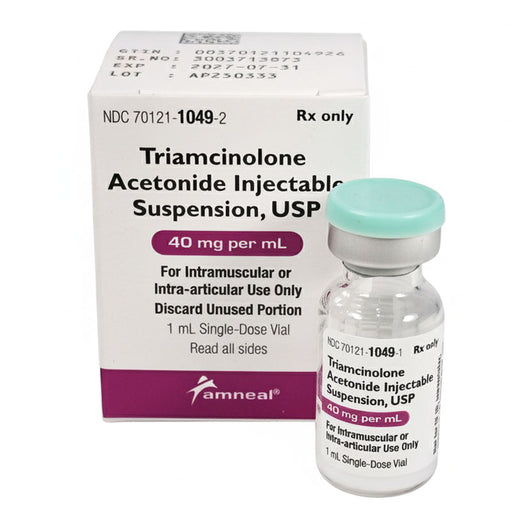
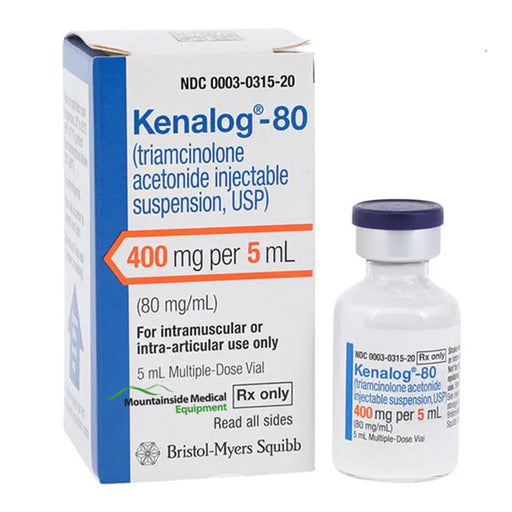
Triamcinolone acetonide 40 mg/mL injection is a potent synthetic glucocorticoid (corticosteroid) formulated as a sterile aqueous suspension. It comes in a 5 mL multiple-use vial (commonly known by the brand name Kenalog-40) containing **40 mg of triamcinolone acetonide per mL. The multi-dose formulation includes 0.99% benzyl alcohol as a preservative (to allow multiple withdrawals) with suspending agents (carboxymethylcellulose and polysorbate 80) and sodium chloride to make it isotonic. At room temperature it is an off-white suspension (the steroid is insoluble in water). This vial is intended for parenteral use – specifically intramuscular (IM) or intra-articular (joint) injection – and not for intravenous, intradermal, intraocular, or neonate use.

  • Active Drug: Triamcinolone acetonide, 40 mg per mL (total 200 mg per 5 mL vial). Triamcinolone acetonide is a long-acting glucocorticoid with powerful anti-inflammatory and immunosuppressive effects. Its chemical name is 9-fluoro-11β,16α,17,21-tetrahydroxypregna-1,4-diene-3,20-dione 16,17-acetonide (MW 434.5).
  • Formulation: Sterile injectable suspension (off-white), contains 0.65–0.66% sodium chloride, 0.99% benzyl alcohol (w/v), ~0.63–0.75% carboxymethylcellulose sodium, and 0.04% polysorbate 80 (with pH ≈5–7). Designed for multi-dose use, the vial is air-flushed with nitrogen at manufacture to preserve stability. It must be shaken vigorously before use to redistribute the steroid particles evenly (the label instructs shaking to ensure a uniform suspension). Aseptic technique is required – each withdrawal should be done with a sterile syringe and needle. Generally, after the vial is first punctured, unused portions should be discarded within ~28 days (typical FDA guidance for benzyl alcohol-preserved vials).
  • Routes of Administration: IM or IA injection only. The product box and label strongly warn: “For intramuscular or intra-articular use only. Not for intravenous, intradermal, epidural, ophthalmic, or intrathecal use.”. It is given by deep IM injection (e.g. gluteal muscle) or injected directly into a joint or bursa by qualified clinicians. (Because it contains benzyl alcohol, it explicitly states “Not for use in neonates”, to avoid “gasp syndrome” in infants. It should never be given IV.)
  • Single vs. Multi-dose Vial: This 5 mL vial is labeled “multiple-dose”, meaning it contains preservative and several doses can be withdrawn. (Many acute steroid injections are also sold in single-dose ampules without preservative, but those are separate products.) Users should label the vial with the date of first use and discard it by manufacturer-recommended date. Administration of Triamcinolone acetonide injection requires proper technique: The suspension must be drawn into a syringe, then injected deeply (e.g. by a nurse or physician) into muscle or joint. It is not given intravenously. After shaking well to resuspend, the prescribed volume is withdrawn. The injection site is prepared aseptically and the drug is injected slowly to reduce pain. Because this steroid is potent and long-acting, it is typically used when other therapies are inadequate.

Indications and Usage

Triamcinolone acetonide injection is indicated whenever a high-potency corticosteroid effect is needed and oral medications are not suitable. It is used to “tide the patient over” in severe inflammatory or autoimmune disorders, or for localized treatment (e.g. joint injection). Examples include:

  • Allergic and dermatologic conditions: Severe or disabling asthma/bronchitis exacerbations, allergic rhinitis not controlled by other means, drug/hypersensitivity reactions, severe eczema or contact dermatitis, bullous dermatoses, Stevens–Johnson syndrome, etc.
  • Endocrine disorders: Certain adrenal gland disorders (e.g. congenital adrenal hyperplasia, Addison’s disease adjunct), hypercalcemia of cancer, and thyroiditis (though oral steroids often suffice). (Hydrocortisone or cortisone are usually preferred for hormone replacement, but triamcinolone may be used with mineralocorticoids if needed.)
  • Gastrointestinal diseases: Severe inflammatory bowel diseases (Crohn’s disease or ulcerative colitis) to manage acute flares.
  • Rheumatic and autoimmune diseases: Active rheumatoid arthritis, lupus (SLE), polymyalgia rheumatica, temporal arteritis, and other connective tissue or collagen diseases. In these, intra-articular or soft-tissue injections may be used to control joint inflammation.
  • Hematologic disorders: Certain anemias or thrombocytopenia due to autoimmunity (e.g. autoimmune hemolytic anemia, thrombocytopenic purpura).
  • Neoplasms (Palliative): As an adjunct in leukemia or lymphoma to reduce inflammation and capillary leak, or for symptom relief during chemotherapy.
  • Neurologic/CNS: Acute exacerbations of multiple sclerosis; to reduce cerebral edema (brain swelling) associated with tumors or after surgery.
  • Ophthalmic/ENT: Various inflammatory eye conditions (uveitis, ocular inflammation unresponsive to topical steroids), severe allergic eye reactions; and chronic otitis or mastoiditis.
  • Miscellaneous: Other conditions where corticosteroids are indicated (e.g. nephrotic syndrome, TB meningitis with impending blockage, organ transplant rejection prophylaxis). In each case, systemic steroid therapy is tailored to specific needs and the long duration of action (weeks) is taken into account.

Pharmacology and Effects

Triamcinolone acetonide has potent anti-inflammatory and immunosuppressive actions. It down-regulates inflammatory cytokines and immune cell activity. After an IM injection, it has a delayed onset and very long duration of action (effects may last several weeks). The extended effect correlates with prolonged adrenal suppression (studies show adrenal axis returns to normal ~30–40 days after a large IM dose). This makes it useful for chronic conditions or where compliance is an issue, but also means side effects can persist.

Because it is a suspension, the priming (dead) volume is low (the volume in the syringe and needle). Unlike microbore tubing discussions in IV sets, here the term “priming” is not used – instead, the user simply injects the measured dose.

Administration and Safety Considerations

  • Technique: Shake the vial thoroughly to ensure uniform suspension (particles settle over time). Use a new sterile syringe/needle for each withdrawal. Withdraw the exact dose (e.g. 1 mL = 40 mg) as ordered. Inject deeply to avoid subcutaneous deposition (especially for IM injections). For intra-articular use, appropriate joint injection technique must be followed (aspirate joint fluid first).
  • Dosage: Dosage depends on condition; often 20–80 mg IM once, repeated every 1–4 weeks as needed or as directed by a specialist. Intra-articular doses might be lower (10–40 mg per joint). Because of the drug’s potency, doses and frequency are typically as low as possible to control disease. Only a healthcare professional should calculate the dose based on clinical factors.
  • Not for IV use: Strictly no intravenous administration – the suspension will not dissolve properly, and IV injection can cause emboli or adverse reactions. The packaging warns explicitly: “For Intramuscular or Intra-articular Use Only. NOT FOR INTRAVENOUS, INTRADERMAL, INTRAOCULAR, EPIDURAL, OR INTRATHECAL USE”
  • Preservative caution: Contains benzyl alcohol. Do not use in neonates or infants (benzyl alcohol can cause fatal toxicity in newborns). Avoid using large volumes of this multi-dose formulation in small children.
  • Shake well before use: The suspension must be well-mixed. The label advises vigorous shaking to resuspend settled particles.
  • Aseptic handling: Strict aseptic technique is mandatory. The vial should be discarded if contaminated. Do not mix this suspension with incompatible solutions (e.g. incompatible drugs, since it is a suspension). Sterility must be maintained throughout use.
  • Storage: Store at controlled room temperature (20–25 °C); protect from extreme heat or freezing. Do not freeze. Protect the vial from light.
  • Multi-dose use: Date the vial when first opened. Standard practice is to discard remaining contents 28 days after opening (FDA guidance for benzyl alcohol–preserved injectables), though actual label instructions may advise a similar limit.

Adverse Effects and Precautions

As a long-acting steroid, triamcinolone injection carries the full profile of corticosteroid risks:

  • Systemic effects: Even though given by IM or IA route, enough steroid enters circulation to cause systemic effects. These include hypothalamic-pituitary-adrenal (HPA) suppression (risk of adrenal insufficiency if stopped abruptly), Cushingoid features (weight gain, “moon face”), fluid retention, hypertension, hyperglycemia (especially in diabetics), mood swings, insomnia, and increased infection risk. Patients should be monitored for signs of these.
  • Injection site reactions: Pain, infection, sterile abscess, subcutaneous atrophy, or tissue necrosis can occur at injection sites. Intra-articular injections carry a risk of joint infection (septic arthritis) or cartilage damage if done improperly. Corticosteroids are generally not injected into infected sites.
  • Immunosuppression: Even a single high dose can transiently impair immune response. Steroid injections can mask infections or exacerbate latent infections (e.g. tuberculosis, herpes). The product labeling warns that people on corticosteroids are more susceptible to infections. After any steroid injection, patients should be watched for signs of infection or blood sugar changes.
  • Neurologic: Rarely, high-dose steroids can cause acute psychosis or myopathy. Use in congestive heart failure, hypertension, or diabetes requires caution.
  • Allergy/hypersensitivity: Contraindicated in people with known hypersensitivity to triamcinolone or any components. (Check for allergies to benzyl alcohol or other excipients.)
  • Other warnings: Never inject particulate such as suspensions into an artery or vein (risk of embolism). IM injections should avoid sites where major blood vessels or nerves could be damaged. Standard corticosteroid precautions apply: careful tapering if used long-term, and special consideration in patients with peptic ulcer disease, osteoporosis, coagulopathy, glaucoma, etc. (Long-term systemic steroid therapy carries risk of adrenal suppression – though single doses usually allow adrenal recovery over 1–2 months.)

In summary, Triamcinolone acetonide 40 mg/mL injection (5 mL vial) is a high-strength corticosteroid preparation for injection. It provides 40 mg of drug per milliliter in a preservative-containing suspension. It is used to treat severe allergic, inflammatory, auto-immune and other steroid-responsive conditions when long-lasting injectable therapy is needed. It must be administered by a healthcare professional via IM or intra-articular injection only, using strict aseptic technique and after shaking to re-suspend the steroid. Key safety points: not for IV use or in neonates (contains benzyl alcohol), and it carries all the usual risks of systemic glucocorticoids (adrenal suppression, infection risk, glucose intolerance, etc.).

Description

Triamcinolone Acetonide Injection 40 mg/mL  (5 mL Multi-Dose Vial)

Triamcinolone acetonide 40 mg/mL injection is a potent synthetic glucocorticoid (corticosteroid) formulated as a sterile aqueous suspension. It comes in a 5 mL multiple-use vial (commonly known by the brand name Kenalog-40) containing **40 mg of triamcinolone acetonide per mL. The multi-dose formulation includes 0.99% benzyl alcohol as a preservative (to allow multiple withdrawals) with suspending agents (carboxymethylcellulose and polysorbate 80) and sodium chloride to make it isotonic. At room temperature it is an off-white suspension (the steroid is insoluble in water). This vial is intended for parenteral use – specifically intramuscular (IM) or intra-articular (joint) injection – and not for intravenous, intradermal, intraocular, or neonate use.

  • Active Drug: Triamcinolone acetonide, 40 mg per mL (total 200 mg per 5 mL vial). Triamcinolone acetonide is a long-acting glucocorticoid with powerful anti-inflammatory and immunosuppressive effects. Its chemical name is 9-fluoro-11β,16α,17,21-tetrahydroxypregna-1,4-diene-3,20-dione 16,17-acetonide (MW 434.5).
  • Formulation: Sterile injectable suspension (off-white), contains 0.65–0.66% sodium chloride, 0.99% benzyl alcohol (w/v), ~0.63–0.75% carboxymethylcellulose sodium, and 0.04% polysorbate 80 (with pH ≈5–7). Designed for multi-dose use, the vial is air-flushed with nitrogen at manufacture to preserve stability. It must be shaken vigorously before use to redistribute the steroid particles evenly (the label instructs shaking to ensure a uniform suspension). Aseptic technique is required – each withdrawal should be done with a sterile syringe and needle. Generally, after the vial is first punctured, unused portions should be discarded within ~28 days (typical FDA guidance for benzyl alcohol-preserved vials).
  • Routes of Administration: IM or IA injection only. The product box and label strongly warn: “For intramuscular or intra-articular use only. Not for intravenous, intradermal, epidural, ophthalmic, or intrathecal use.”. It is given by deep IM injection (e.g. gluteal muscle) or injected directly into a joint or bursa by qualified clinicians. (Because it contains benzyl alcohol, it explicitly states “Not for use in neonates”, to avoid “gasp syndrome” in infants. It should never be given IV.)
  • Single vs. Multi-dose Vial: This 5 mL vial is labeled “multiple-dose”, meaning it contains preservative and several doses can be withdrawn. (Many acute steroid injections are also sold in single-dose ampules without preservative, but those are separate products.) Users should label the vial with the date of first use and discard it by manufacturer-recommended date. Administration of Triamcinolone acetonide injection requires proper technique: The suspension must be drawn into a syringe, then injected deeply (e.g. by a nurse or physician) into muscle or joint. It is not given intravenously. After shaking well to resuspend, the prescribed volume is withdrawn. The injection site is prepared aseptically and the drug is injected slowly to reduce pain. Because this steroid is potent and long-acting, it is typically used when other therapies are inadequate.

Indications and Usage

Triamcinolone acetonide injection is indicated whenever a high-potency corticosteroid effect is needed and oral medications are not suitable. It is used to “tide the patient over” in severe inflammatory or autoimmune disorders, or for localized treatment (e.g. joint injection). Examples include:

  • Allergic and dermatologic conditions: Severe or disabling asthma/bronchitis exacerbations, allergic rhinitis not controlled by other means, drug/hypersensitivity reactions, severe eczema or contact dermatitis, bullous dermatoses, Stevens–Johnson syndrome, etc.
  • Endocrine disorders: Certain adrenal gland disorders (e.g. congenital adrenal hyperplasia, Addison’s disease adjunct), hypercalcemia of cancer, and thyroiditis (though oral steroids often suffice). (Hydrocortisone or cortisone are usually preferred for hormone replacement, but triamcinolone may be used with mineralocorticoids if needed.)
  • Gastrointestinal diseases: Severe inflammatory bowel diseases (Crohn’s disease or ulcerative colitis) to manage acute flares.
  • Rheumatic and autoimmune diseases: Active rheumatoid arthritis, lupus (SLE), polymyalgia rheumatica, temporal arteritis, and other connective tissue or collagen diseases. In these, intra-articular or soft-tissue injections may be used to control joint inflammation.
  • Hematologic disorders: Certain anemias or thrombocytopenia due to autoimmunity (e.g. autoimmune hemolytic anemia, thrombocytopenic purpura).
  • Neoplasms (Palliative): As an adjunct in leukemia or lymphoma to reduce inflammation and capillary leak, or for symptom relief during chemotherapy.
  • Neurologic/CNS: Acute exacerbations of multiple sclerosis; to reduce cerebral edema (brain swelling) associated with tumors or after surgery.
  • Ophthalmic/ENT: Various inflammatory eye conditions (uveitis, ocular inflammation unresponsive to topical steroids), severe allergic eye reactions; and chronic otitis or mastoiditis.
  • Miscellaneous: Other conditions where corticosteroids are indicated (e.g. nephrotic syndrome, TB meningitis with impending blockage, organ transplant rejection prophylaxis). In each case, systemic steroid therapy is tailored to specific needs and the long duration of action (weeks) is taken into account.

Pharmacology and Effects

Triamcinolone acetonide has potent anti-inflammatory and immunosuppressive actions. It down-regulates inflammatory cytokines and immune cell activity. After an IM injection, it has a delayed onset and very long duration of action (effects may last several weeks). The extended effect correlates with prolonged adrenal suppression (studies show adrenal axis returns to normal ~30–40 days after a large IM dose). This makes it useful for chronic conditions or where compliance is an issue, but also means side effects can persist.

Because it is a suspension, the priming (dead) volume is low (the volume in the syringe and needle). Unlike microbore tubing discussions in IV sets, here the term “priming” is not used – instead, the user simply injects the measured dose.

Administration and Safety Considerations

  • Technique: Shake the vial thoroughly to ensure uniform suspension (particles settle over time). Use a new sterile syringe/needle for each withdrawal. Withdraw the exact dose (e.g. 1 mL = 40 mg) as ordered. Inject deeply to avoid subcutaneous deposition (especially for IM injections). For intra-articular use, appropriate joint injection technique must be followed (aspirate joint fluid first).
  • Dosage: Dosage depends on condition; often 20–80 mg IM once, repeated every 1–4 weeks as needed or as directed by a specialist. Intra-articular doses might be lower (10–40 mg per joint). Because of the drug’s potency, doses and frequency are typically as low as possible to control disease. Only a healthcare professional should calculate the dose based on clinical factors.
  • Not for IV use: Strictly no intravenous administration – the suspension will not dissolve properly, and IV injection can cause emboli or adverse reactions. The packaging warns explicitly: “For Intramuscular or Intra-articular Use Only. NOT FOR INTRAVENOUS, INTRADERMAL, INTRAOCULAR, EPIDURAL, OR INTRATHECAL USE”
  • Preservative caution: Contains benzyl alcohol. Do not use in neonates or infants (benzyl alcohol can cause fatal toxicity in newborns). Avoid using large volumes of this multi-dose formulation in small children.
  • Shake well before use: The suspension must be well-mixed. The label advises vigorous shaking to resuspend settled particles.
  • Aseptic handling: Strict aseptic technique is mandatory. The vial should be discarded if contaminated. Do not mix this suspension with incompatible solutions (e.g. incompatible drugs, since it is a suspension). Sterility must be maintained throughout use.
  • Storage: Store at controlled room temperature (20–25 °C); protect from extreme heat or freezing. Do not freeze. Protect the vial from light.
  • Multi-dose use: Date the vial when first opened. Standard practice is to discard remaining contents 28 days after opening (FDA guidance for benzyl alcohol–preserved injectables), though actual label instructions may advise a similar limit.

Adverse Effects and Precautions

As a long-acting steroid, triamcinolone injection carries the full profile of corticosteroid risks:

  • Systemic effects: Even though given by IM or IA route, enough steroid enters circulation to cause systemic effects. These include hypothalamic-pituitary-adrenal (HPA) suppression (risk of adrenal insufficiency if stopped abruptly), Cushingoid features (weight gain, “moon face”), fluid retention, hypertension, hyperglycemia (especially in diabetics), mood swings, insomnia, and increased infection risk. Patients should be monitored for signs of these.
  • Injection site reactions: Pain, infection, sterile abscess, subcutaneous atrophy, or tissue necrosis can occur at injection sites. Intra-articular injections carry a risk of joint infection (septic arthritis) or cartilage damage if done improperly. Corticosteroids are generally not injected into infected sites.
  • Immunosuppression: Even a single high dose can transiently impair immune response. Steroid injections can mask infections or exacerbate latent infections (e.g. tuberculosis, herpes). The product labeling warns that people on corticosteroids are more susceptible to infections. After any steroid injection, patients should be watched for signs of infection or blood sugar changes.
  • Neurologic: Rarely, high-dose steroids can cause acute psychosis or myopathy. Use in congestive heart failure, hypertension, or diabetes requires caution.
  • Allergy/hypersensitivity: Contraindicated in people with known hypersensitivity to triamcinolone or any components. (Check for allergies to benzyl alcohol or other excipients.)
  • Other warnings: Never inject particulate such as suspensions into an artery or vein (risk of embolism). IM injections should avoid sites where major blood vessels or nerves could be damaged. Standard corticosteroid precautions apply: careful tapering if used long-term, and special consideration in patients with peptic ulcer disease, osteoporosis, coagulopathy, glaucoma, etc. (Long-term systemic steroid therapy carries risk of adrenal suppression – though single doses usually allow adrenal recovery over 1–2 months.)

In summary, Triamcinolone acetonide 40 mg/mL injection (5 mL vial) is a high-strength corticosteroid preparation for injection. It provides 40 mg of drug per milliliter in a preservative-containing suspension. It is used to treat severe allergic, inflammatory, auto-immune and other steroid-responsive conditions when long-lasting injectable therapy is needed. It must be administered by a healthcare professional via IM or intra-articular injection only, using strict aseptic technique and after shaking to re-suspend the steroid. Key safety points: not for IV use or in neonates (contains benzyl alcohol), and it carries all the usual risks of systemic glucocorticoids (adrenal suppression, infection risk, glucose intolerance, etc.).

Get Notified When Back in Stock