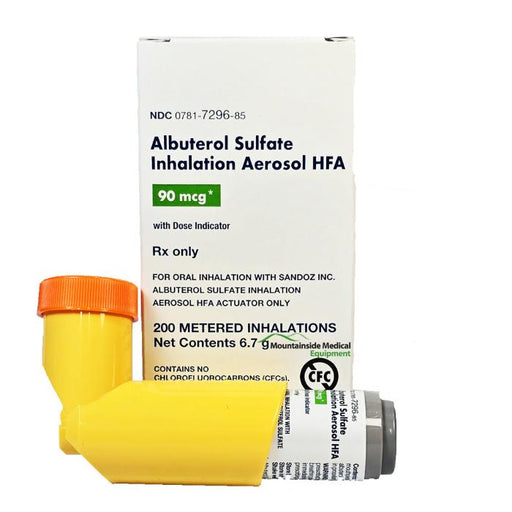
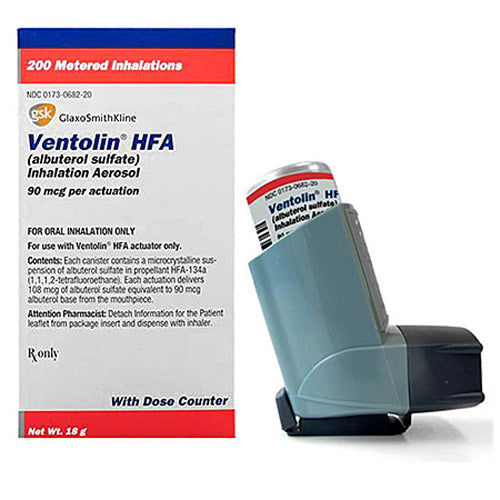
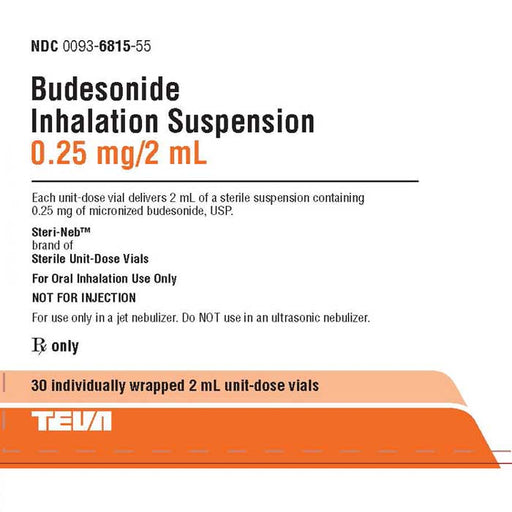
Albuterol Inhaler 90 mcg Aerosol offers fast, reliable, and effective relief of acute asthma symptoms and bronchospasm caused by reversible obstructive airway diseases, including asthma and chronic obstructive pulmonary disease (COPD). Each metered-dose inhaler (MDI) delivers 200 precisely measured puffs of 90 micrograms of albuterol sulfate, ensuring patients and caregivers have the confidence and control needed during an asthma attack or sudden breathing difficulty.
Albuterol Inhaler 90 mcg Aerosol (200 Metered Inhalations)
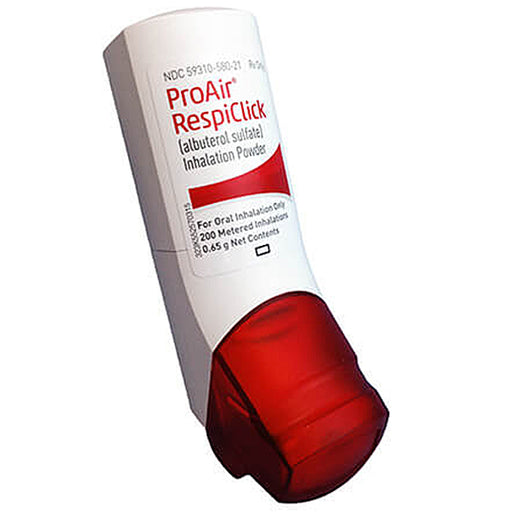
Albuterol sulfate (USAN salbutamol) is a fast-acting short-acting β₂-agonist (SABA) bronchodilator delivered via a portable metered-dose inhaler (MDI). This FDA-approved prescription inhaler contains 200 puffs, each delivering 90 mcg of albuterol base (108 mcg of albuterol sulfate). It works within minutes to relax tightened airway muscles and open bronchial passages, providing immediate relief from acute asthma or COPD symptoms such as wheezing, coughing, chest tightness, and shortness of breath. Trusted by physicians and emergency responders, this albuterol inhaler is indicated for children (age ≥4) and adults with reversible obstructive airway diseases (asthma, chronic bronchitis, emphysema, etc.). In summary, this powerful rescue inhaler is designed to: relieve sudden breathing difficulty, abort acute asthma attacks, and help prevent exercise-induced bronchospasm under a doctor’s guidance.
-
Fast-Acting Relief: Begins to work in minutes to ease airflow and stop an asthma attack or COPD flare-up.
-
Dual Action (Relief & Prevention): Indicated for both treating acute bronchospasm and for preventing exercise-induced asthma. Take 1–2 puffs before exercise to reduce exercise-triggered wheezing.
-
High-Capacity, Precise Dosing: 200 metered inhalations per canister. Each actuation delivers a consistent 90 mcg dose (108 mcg sulfate). An integrated dose counter starts at 204 and counts down, so you always know remaining doses
-
Portable Inhaler: Compact, lightweight aerosol canister with mouthpiece – easy to carry in a pocket or asthma kit. Includes a protective cap to keep the mouthpiece clean.
-
Prescription Strength: FDA-approved and doctor-recommended asthma/COPD medication. This inhaler is a generic equivalent to brand products (Ventolin HFA, ProAir HFA, Proventil HFA) containing the same active albuterol.
-
Environmentally Friendly (HFA Propellant): Uses a CFC-free hydrofluoroalkane propellant. No ozone-depleting chlorofluorocarbons – safer for the environment.
-
Age 4+ Use: Approved for pediatric use (children ≥4 years old) through adults, making it suitable for most asthma patients. Always follow pediatric dosing instructions from a healthcare provider.
Indications & Uses
This Albuterol Inhaler is indicated for conditions involving reversible airway constriction. In clinical terms, it treats or prevents bronchospasm in patients (age ≥4) with asthma, COPD, or reactive airway disease. Key uses include:
-
Acute Asthma Relief: At the first sign of an asthma attack or flare (wheezing, coughing, chest tightness), this inhaler provides rapid bronchospasm relief. It is a rescue inhaler – use as directed when needed for sudden breathing difficulty.
-
Chronic Obstructive Pulmonary Disease (COPD): Eases shortness of breath and wheezing in COPD patients (chronic bronchitis, emphysema) by relaxing airway muscles.
-
Exercise-Induced Bronchospasm (EIB): Effective for preventing exercise-triggered asthma. Adults and children can take 2 puffs (180 mcg) about 15–30 minutes before vigorous exercise to reduce bronchospasm risk.
-
Allergic or Environmental Triggers: Provides relief from wheezing and tightness caused by allergens (pollen, dust) or irritants (cold air, smoke). Taking albuterol before exposure can help combat triggered bronchospasm.
-
Reactive Airway Disease (RAD): For patients labeled with RAD or “asthma-like” conditions, this inhaler helps manage acute episodes.
Note: This medication is not a daily controller or steroid – it is intended for immediate symptom relief only. Always use it as directed by a healthcare provider, and maintain any prescribed long-term asthma therapy separately.
Directions for Use
Follow your healthcare provider’s instructions. Typical administration steps are:
-
Shake & Prime: Shake the inhaler well before each use. If using a new inhaler (first use) or if it hasn’t been used for >2 weeks, prime it by releasing 4 test sprays into the air (away from face). This ensures accurate dosing.
-
Administering a Dose: Breathe out fully, then place your mouth tightly around the mouthpiece. Begin a slow, deep inhalation and press down on the canister to release one spray. Hold your breath for ~5–10 seconds to allow the medicine to reach deep lungs, then exhale slowly. If a second puff is prescribed, wait about 30–60 seconds and repeat.
-
Typical Dosage: For most adults and children ≥4 years, the recommended dose for treating acute symptoms is 1–2 inhalations (90–180 mcg) every 4–6 hours as needed. Do not exceed the number of inhalations prescribed. For exercise prevention, the usual dose is 2 inhalations (180 mcg) 15–30 minutes before activity. Follow your doctor’s exact dosing and timing.
-
Dose Counter: Monitor the dose counter. It starts at 204 (accounting for priming) and counts down by one for each puff. When the counter nears “00,” get a replacement inhaler – do not run out of doses.
-
Storage: Keep the inhaler at room temperature (no freezing). Store upright with cap on to protect the mouthpiece. Discard or replace 6 months after opening or when counter is empty, whichever comes first.
Always read the Patient Information leaflet and use exactly as prescribed. Rinse your mouth with water after inhalation (especially if also using steroid inhalers) and clean the mouthpiece regularly to prevent clogging.
Possible Side Effects & Precautions
Common Side Effects: Mild effects are generally short-lived. These may include shakiness (tremor), nervousness, headache, palpitations (fast heart rate), throat irritation, cough, or runny nose. Let your doctor know if these do not go away or become bothersome.
Warnings: In rare cases, an albuterol inhaler can cause paradoxical bronchospasm – a sudden worsening of breathing after use. If this occurs, stop use immediately and seek emergency care. Also watch for signs of an allergic reaction (hives, rash, facial swelling, severe breathing difficulty); if these occur, discontinue use and get medical help.
Cardiovascular Effects: Albuterol can temporarily increase heart rate and blood pressure. Use with caution if you have heart disease (coronary insufficiency, arrhythmias, hypertension). Severe asthma usually takes priority over potential effects of albuterol, but inform your doctor if you have cardiac issues.
Age Restrictions: Not for children under 4 years old (the Ventolin HFA label specifies 4+ years). Dose adjustments may be needed for young children.
Other Precautions: Tell your provider about all other conditions (diabetes, thyroid problems, seizure disorders, low potassium, pregnancy, etc.) and medications, since albuterol can interact or exacerbate certain conditions. Use only the prescribed dose – overuse can lead to dangerous side effects (severe tremors, arrhythmias, low potassium).
If symptoms persist or recur frequently, or if long-term control medication is needed, consult your healthcare provider. This inhaler is not a cure – it relieves symptoms. Always follow your asthma action plan and consult a doctor for any unusual or severe symptoms.
Always keep this rescue inhaler accessible (in your purse, backpack or bedside) so you have quick access during an acute attack. Do not share this prescription medication with others.
Order Albuterol Inhaler 90 mcg Aerosol 200 Metered Inhalations
Get fast-acting, reliable relief from asthma attacks and bronchospasm. Don’t leave home without your FDA-approved, prescription Albuterol Inhaler—trusted by doctors, patients, and emergency responders everywhere.
Prescription required. For use as directed by a healthcare provider.
Uses and Applications
Albuterol Inhaler 90 mcg is indicated for:
- Relief of acute bronchospasm: Fast-acting treatment for asthma attacks or sudden wheezing/shortness of breath in asthma or COPD patients.
- Prevention of exercise-induced bronchospasm: Use before exercise to reduce the risk of asthma symptoms brought on by physical activity.
- Rescue medication for asthma and COPD: Not intended as maintenance therapy; for rapid symptom relief only.
- Healthcare professional recommendation for:
- Asthma (children, teens, adults)
- COPD
- Reactive airway disease
- Allergic or environmental triggers
- Portable asthma treatment: Home, school, work, travel, gym, and on-the-go
How to Use
- Shake inhaler well before each use.
- Remove cap. Breathe out fully, away from the inhaler.
- Place mouthpiece in your mouth, closing lips around it.
- Press down on the inhaler and inhale deeply at the same time.
- Hold your breath for up to 10 seconds, then exhale slowly.
- Wait 1 minute between puffs if a second dose is required.
- Rinse mouth after use, especially if using inhaled corticosteroids as part of your regimen.
- Clean mouthpiece weekly to avoid blockage (remove canister, rinse mouthpiece with warm water, air dry).
Always follow your physician’s specific instructions. Use a spacer if prescribed, especially for children.
Dosage and Administration
- Acute Symptoms (Adults and Children ≥4 years):
- 1 or 2 inhalations every 4 to 6 hours as needed for relief of bronchospasm.
- Prevention of exercised-induced bronchospasm:
- 2 inhalations 15 to 30 minutes before exercise.
- Do not exceed recommended dose:
- Total daily max should not exceed 12 inhalations in 24 hours unless directed by your doctor.
If symptoms worsen, become more frequent, or if you use your inhaler more often than prescribed, seek medical attention immediately.
Drug Interactions
- Beta-blockers (e.g., propranolol): May decrease effectiveness and increase risk of bronchospasm.
- Diuretics (non-potassium-sparing): May increase risk of hypokalemia.
- MAO inhibitors, tricyclic antidepressants: Enhance cardiovascular effects; avoid concurrent use or use with caution under supervision.
- Other sympathomimetic agents: Increased risk of heart and neurological side effects.
- Digoxin: May lower digoxin levels.
Always inform your doctor and pharmacist about all medicines, supplements, and herbal products you are taking.
Side Effects
Common Side Effects
- Shakiness, tremor
- Nervousness, restlessness
- Headache
- Throat irritation, cough, dry mouth
- Fast heart rate (tachycardia)
- Muscle cramps
Serious Side Effects/Rare
- Chest pain, palpitations, irregular heartbeat
- Severe allergic reaction (rash, swelling, hives, difficulty breathing)
- Paradoxical bronchospasm (worsening wheezing)
- Low potassium (muscle weakness, abnormal heart rhythms)
- Seizures (extremely rare)
Contact your doctor immediately for chest pain, palpitations, severe dizziness, allergic reaction, or if breathing difficulties worsen after use.